Filippo Gaddo, Managing Director at Alvarez & Marsal, SPE Councillor and host of the Econ Thoughts SPE Podcast, spoke with Branko Milanovic, Research Professor at the Stone Center on Socio-Economic Inequality at the CUNY Graduate Center and Visiting Professor at the LSE’s International Inequalities Institute, about global inequality, the changing structure of capitalism and the emergence of a new international economic order. More information about Branko and his work is available on his personal blog. The discussion draws in particular on Branko’s latest book, The Great Global Transformation: National Market Liberalism in a Multipolar World (Amazon UK).
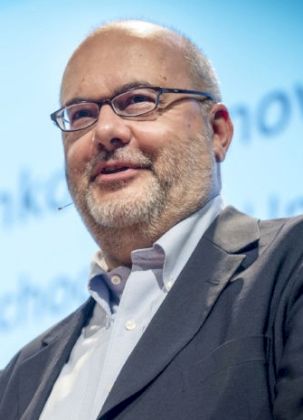
The conversation begins with Branko’s long-standing work on global inequality and the remarkable transformation of the global income distribution over the past three decades. The rapid growth of China, and subsequently India, helped reduce global inequality substantially and created a much larger global middle class. The rise of Asia has not simply changed relative incomes; it has changed relative economic and political power. People in Western countries increasingly compete for globally priced goods and assets with a much larger and wealthier Asian middle class, while China’s economic rise has transformed the balance of geopolitical power. The conversation then turns to inequality within advanced economies and Branko’s concept of “homoplutia”: a new elite whose members combine high labour incomes with significant capital income. Unlike the traditional capitalist class, this group is simultaneously rich through work, skills and ownership. Filippo and Branko discuss whether this represents genuine meritocracy or whether inherited wealth, access to elite education and the transmission of advantages between generations risk creating a more closed elite with growing political influence.
The discussion then broadens to the central argument of The Great Global Transformation. Branko argues that the economic order associated with the era of globalisation is giving way to what he calls “national market liberalism”. Market-oriented policies, private enterprise and deregulation can continue domestically, while international economic relations become increasingly mercantilist — characterised by tariffs, industrial policy, economic security and geopolitical competition. In this interpretation, the rise of China has made it increasingly difficult to maintain an international system built around both unrestricted global markets and US geopolitical dominance. Filippo and Branko discuss whether such a system is internally coherent and sustainable, with Branko suggesting that it could characterise international economic relations for decades even if it is unlikely to represent a permanent new equilibrium. Finally, the conversation looks at what these changes could mean for the welfare state, trade policy and artificial intelligence. Branko argues that the increasingly zero-sum interpretation of international trade is no longer confined to the United States but is becoming visible in Europe and China as well. On AI, he expects technological change to increase the share of income accruing to capital and potentially displace some forms of labour, although he cautions against assuming that the total quantity of jobs is fixed. The more difficult challenge may be the speed of adjustment: if successive technological shocks arrive before economies and workers have adapted to the previous one, economies may increasingly find themselves in a state of permanent transition rather than moving neatly from one equilibrium to another.
Branko Milanovic is Research Professor at the Stone Center on Socio-Economic Inequality at the CUNY Graduate Center and Visiting Professor at the International Inequalities Institute at the London School of Economics. He previously spent almost twenty years as Lead Economist in the World Bank’s Research Department and is one of the world’s leading scholars of global income inequality. His books include Global Inequality: A New Approach for the Age of Globalization (Amazon UK), Capitalism, Alone: The Future of the System That Rules the World (Amazon UK), Visions of Inequality: From the French Revolution to the End of the Cold War (Amazon UK), The World Under Capitalism: Observations on Economics, Politics, History, and Culture (Amazon UK) and, most recently, The Great Global Transformation (Amazon UK). He is also closely associated with the influential “elephant curve”, illustrating how the gains from globalisation were distributed across the global income distribution.
You can find us on Spotify or Apple podcasts.
Interview with Branko Milanovic
This video is hosted by Vimeo. It opens only when you choose to watch it.
WatchMore Podcasts

Interview with Alex Edmans
Filippo Gaddo, Managing Director at Alvarez & Marsal, SPE Councillor and host of the Econ Thoughts SPE Podcast, spoke with Alex Edmans, Professor of...

Interview with Mike Munger
Filippo Gaddo, Managing Director at Alvarez & Marsal, SPE Councillor and host of the Econ Thoughts SPE Podcast, spoke with Michael Munger, Professor of...
Interview with Jesús Fernández-Villaverde
Filippo Gaddo, Managing Director at Alvarez & Marsal, SPE Councillor and host of the Econ Thoughts SPE Podcast, speaks with Jesús...