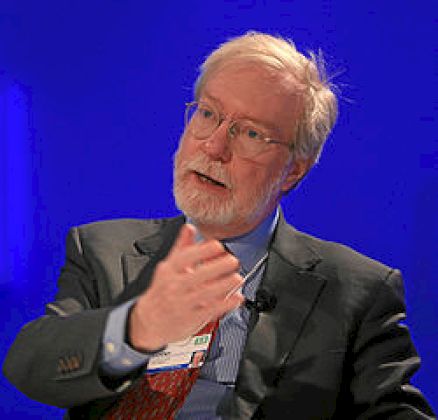
Filippo Gaddo, Managing Director at Alvarez & Marsal, SPE Councillor and host of the Econ Thoughts SPE Podcast, spoke with Sir Paul Collier, Professor of Economics and Public Policy at the University of Oxford, about regional inequality, the importance of place and community, and why economics needs to rethink some of its fundamental assumptions. The discussion draws particularly on Paul’s recent book, Left Behind: A New Economics for Neglected Places [link: https://www.penguin.co.uk/books/297822/left-behind-by-collier-paul/9780141984117 ], while also exploring themes from The Future of Capitalism and Greed is Dead, co-authored with Sir John Kay. It ranges from the decline and renewal of former industrial regions to devolution, social capital, culture, finance and the need for new ways of thinking about economic policy.
The conversation started with a central question from Left Behind: why do particular places fall behind even when the countries in which they are located continue to prosper? Paul argues that decline often begins with an economic or technological shock. Industries on which a town or region has been built can disappear or become obsolete. But the initial shock is only part of the story: as places decline relative to more successful regions, businesses, local government and communities can begin blaming one another, weakening the cooperation needed for recovery. The more important question is how places can turn themselves around. Paul contrasts struggling British industrial areas with examples such as Pittsburgh and parts of Germany. A critical difference, he argues, is the degree of power, financial capacity and institutional knowledge available locally. Successful renewal requires local government, businesses, universities and civil society to identify common interests and work together. This leads to a wider discussion about the highly centralised nature of British policymaking and the role of the Treasury. Paul argues that local and regional leaders need greater freedom to experiment, learn and develop solutions appropriate to their own circumstances rather than depending on decisions made in Whitehall. The principle is that knowledge is dispersed, and people closer to a problem often possess information and practical experience that cannot easily be replicated at the centre.
The discussion then turns to a broader rethinking of economics. Paul highlights radical uncertainty: situations in which probabilities cannot reliably be calculated and the correct response is genuinely unknowable. In such circumstances, resilience, diversification, experimentation and learning become more important than attempting to optimise around a single forecast. Devolution can be understood in similar terms, by allowing different places to try different approaches and learn from one another. A second theme is interdependence. Economic outcomes are not simply the product of isolated individuals making independent decisions. Businesses, government, universities and civil society depend on one another, and successful places require trust and cooperation between them. This connects to Paul’s critique of the traditional model of homo economicus. He challenges the idea that people can adequately be understood as selfish individuals responding only to incentives. Humans are social and cooperative, and behaviour is shaped by norms, relationships and culture. Much economic activity therefore takes place at what Paul describes as the “meso” level – the institutions, firms, cities, regions and communities that sit between microeconomics and macroeconomics.
Another important area is narrative economics. Paul argues that people understand economic change through narratives about how actions lead to outcomes, not through models alone. Policymakers therefore need not only technically sound policies but also credible explanations of why those policies should improve people’s lives. The conversation also turns to finance and regional development. Paul argues that Britain has lost much of the locally rooted, risk-bearing finance capable of identifying and supporting promising businesses outside London and the South East. Rebuilding sources of finance with local knowledge is, in his view, an important part of creating stronger regional economies. Despite the scale of the challenges, Paul ends on an optimistic note. He sees signs that economics itself is changing, with greater attention being paid to institutions, place, culture, uncertainty and social purpose. Across the conversation, a common theme emerges: prosperous economies require more than efficient markets or effective central government. They also depend on capable local institutions, relationships of trust, communities with agency and the ability to learn from successful experiments elsewhere.
Sir Paul Collier is Professor of Economics and Public Policy at the Blavatnik School of Government at the University of Oxford and Oxford Academic Director of the International Growth Centre. He previously served as Director of the Development Research Group at the World Bank. His research has ranged from poverty, conflict and economic development to migration, capitalism and regional inequality. He is the author of numerous influential books, including The Bottom Billion, The Future of Capitalism and, most recently, Left Behind: A New Economics for Neglected Places, as well as Greed is Dead with Sir John Kay.
You can find us on Spotify or Apple podcasts.
Interview with Paul Collier
This video is hosted by Vimeo. It opens only when you choose to watch it.
WatchMore Podcasts
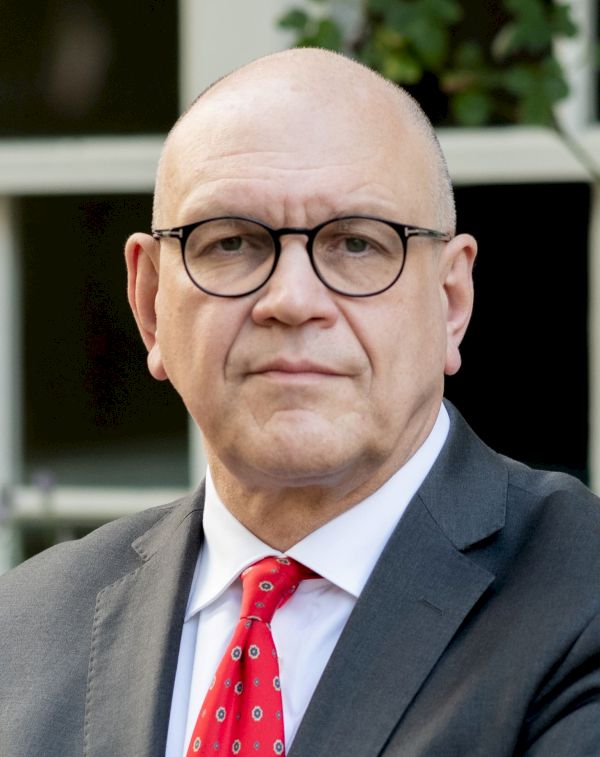
Interview with Lorenzo Codogno
Filippo Gaddo, Managing Director at Alvarez & Marsal, SPE Councillor and host of the Econ Thoughts SPE Podcast, spoke with Lorenzo Codogno, former Chief...

Interview with Alex Edmans
Filippo Gaddo, Managing Director at Alvarez & Marsal, SPE Councillor and host of the Econ Thoughts SPE Podcast, spoke with Alex Edmans, Professor of...
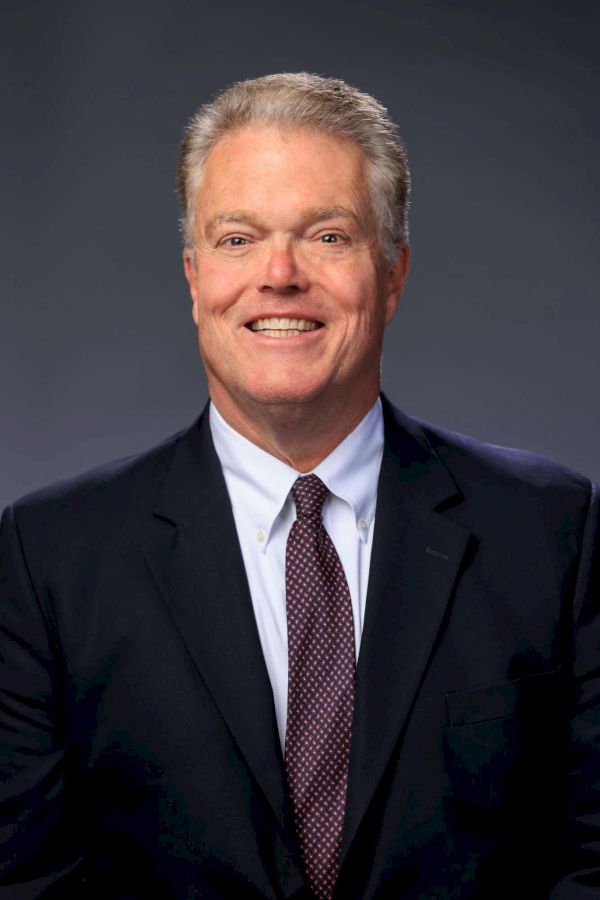
Interview with Mike Munger
Filippo Gaddo, Managing Director at Alvarez & Marsal, SPE Councillor and host of the Econ Thoughts SPE Podcast, spoke with Michael Munger, Professor of...