Filippo Gaddo, Managing Director at Alvarez & Marsal, SPE Councillor and host of the Econ Thoughts SPE Podcast, spoke with George Selgin, Professor Emeritus of Economics at the University of Georgia and former Senior Fellow at the Cato Institute, about the Great Depression, the impact of Roosevelt’s New Deal, the role of monetary and fiscal policy in economic recovery, and the lessons for modern central banking.

The discussion focuses on George’s recent book, False Dawn: The New Deal and the Promise of Recovery, which challenges conventional interpretations of the New Deal. George argues that neither the view that Roosevelt’s policies rescued the US economy nor the opposing claim that they uniformly obstructed recovery adequately reflects the historical evidence. Instead, he offers a more nuanced assessment, distinguishing between policies that supported recovery and those that delayed it.
George identifies the stabilisation of the banking system and the suspension of the gold standard in 1933 as two of the most important achievements of the early Roosevelt administration. However, he argues that the government subsequently failed to take full advantage of the opportunities for monetary expansion, while fiscal stimulus remained surprisingly limited. Much of the economic recovery during the 1930s was instead driven by gold inflows from Europe, reflecting growing political instability and the threat of war, rather than deliberate US policy.
The conversation then explores the adverse effects of other New Deal measures, particularly the National Recovery Administration’s attempts to raise prices and wages through industry controls, and the impact of policy uncertainty and increasingly hostile government rhetoric on private investment. George argues that the failure of business investment to recover was a central reason for the prolonged Depression. The discussion also examines the sharp recession of 1937–38, which he attributes to a combination of monetary tightening, the sterilisation of gold inflows, higher bank reserve requirements and fiscal retrenchment.
Turning to the Second World War, George challenges the idea that wartime government spending represented a sustainable end to the Depression. While military expenditure temporarily boosted output and employment, he argues that the genuine recovery came after 1945, when private investment rebounded strongly, supported by a more favourable policy environment and improved relations between government and business.
The final part of the interview considers the lessons for modern monetary policy, particularly the Federal Reserve’s response to the 2008 financial crisis. George argues that, although central banks have learned the importance of monetary stimulus, they have not always acted sufficiently quickly. He also makes the case for targeting nominal GDP rather than inflation, arguing that stabilising aggregate spending provides a better framework for monetary policy, particularly when economies face supply shocks.
The discussion highlights the importance of understanding the historical evidence behind economic policy, the interaction between monetary conditions and private investment, and the risks of drawing overly simplistic lessons from the Great Depression.
George Selgin is Professor Emeritus of Economics at the University of Georgia and a former Senior Fellow and Director of the Center for Monetary and Financial Alternatives at the Cato Institute. A leading scholar of monetary economics, banking and economic history, his research has covered free banking, monetary institutions, central banking and the history of US monetary policy. His books include The Theory of Free Banking, Good Money, Floored! and False Dawn: The New Deal and the Promise of Recovery.
Interview with George Selgin
This video is hosted by Vimeo. It opens only when you choose to watch it.
WatchMore Podcasts
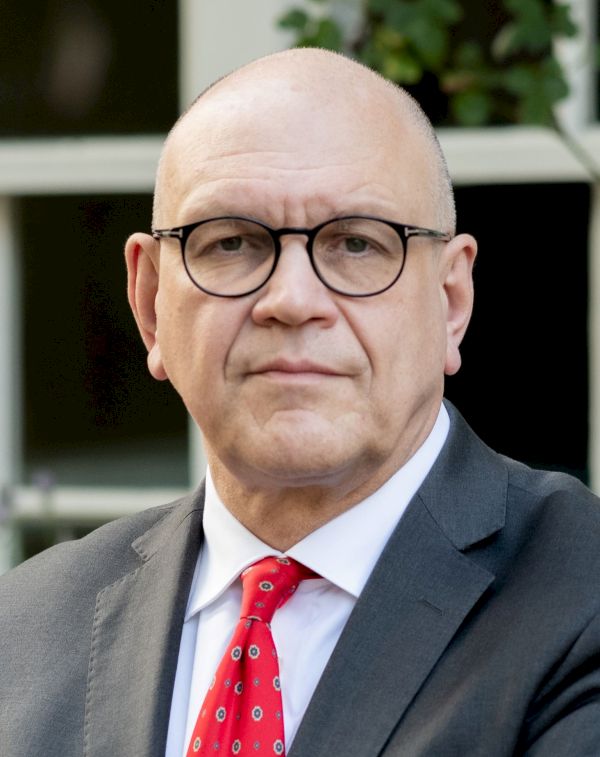
Interview with Lorenzo Codogno
Filippo Gaddo, Managing Director at Alvarez & Marsal, SPE Councillor and host of the Econ Thoughts SPE Podcast, spoke with Lorenzo Codogno, former Chief...
Interview with Paul Collier
Filippo Gaddo, Managing Director at Alvarez & Marsal, SPE Councillor and host of the Econ Thoughts SPE Podcast, spoke with Sir Paul Collier, Professor of...

Interview with Alex Edmans
Filippo Gaddo, Managing Director at Alvarez & Marsal, SPE Councillor and host of the Econ Thoughts SPE Podcast, spoke with Alex Edmans, Professor of...