Originally published in 2004 in The Business Economist, volume 35, issue 2. The original publication day is unrecorded.
Thomas L Brewer, Stephen Young and Stephen E Guisinger, eds, Edward Elgar, 2003, xii + 177 pages, £49.95.
From The Business Economist, volume 35, issue 2 (2004).
This volume brings together a symposium of papers, previously published in the Journal of International Business Studies, by a distinguished cast of luminaries taking stock of developments in the literature on multinationals (MNEs) between the first and second editions of Richard Caves’s Multinational Enterprise and Economic Analysis (Cambridge University Press) – 1982 to 1996 – and to provide an agenda for future research. The volume is effectively a festschrift for Richard Caves but dedicated to the late Stephen Guisinger; himself a distinguished and effective analyst of MNE policy issues.
The first chapter, by Caves himself, provides an informed general survey of the state of play of our understanding of MNEs, arguing that economics is the only discipline that provides “a unified theoretical view of market processes and allocation decisions” by MNEs. He identifies problematic areas of analysis, particularly with respect to data collection and the relationship between theory and prediction, and then sets out several potentially important areas of future research – competition, finance and alliances. This is followed by a contribution from Peter Buckley and Mark Casson on models of MNEs in the context of the development of both the literature and the changing nature and structures of MNEs themselves. They highlight the growing importance of dynamic flexibility with respect to internal organisation, location and firm-specific advantage. John Dunning focuses on developments in the international allocation of activity and contrasts how factors determining the location of MNEs have changed. In particular, he emphasises the increasing importance of strategic asset-seeking and intangible assets. Edward Graham uses a formal game-theoretic approach to analyse MNEs and market structure, arguing that the decline in their global concentration is worthy of note. Sylvia Ostry tackles issues of technology and productivity, notably with respect to globalisation, innovation, standards and e-commerce in the light of new forms of MNEs from emerging markets. Louis T Wells discusses the, at times tense, relationship between MNEs and developing countries and the potential contribution of FDI to their growth given appropriate policies. Alan Rugman and Alain Verbeke provide a conceptual framework for analysing the MNE-government policy interface. Stephen Young and Thomas L Brewer then conclude the volume by drawing upon ideas from the contributors and focus on their policy implications as well as emphasising key areas of analytical debate worthy of further investigation. These include international competition policy issues (possibly at the WTO), investment incentives and performance requirements, interaction between trade and FDI and social responsibility.
This is a relatively brief volume but it contains insightful contributions from most of the leading academics in the field of the economic analysis of MNEs. Each chapter is both thoughtful and provocative in its distilled survey of recent developments and in identifying areas of future interest. As such, there are far more ‘nuggets’ contained here than in most volumes. The book will appeal primarily to (specialist) academic economists and their prospective doctoral students but it also provides a lucid survey of issues and analysis that, in great part is accessible to the informed non-specialist.
Robert Read University of Lancaster
Archived source: 2004-12-15 website capture.
More Book Reviews
All Reviews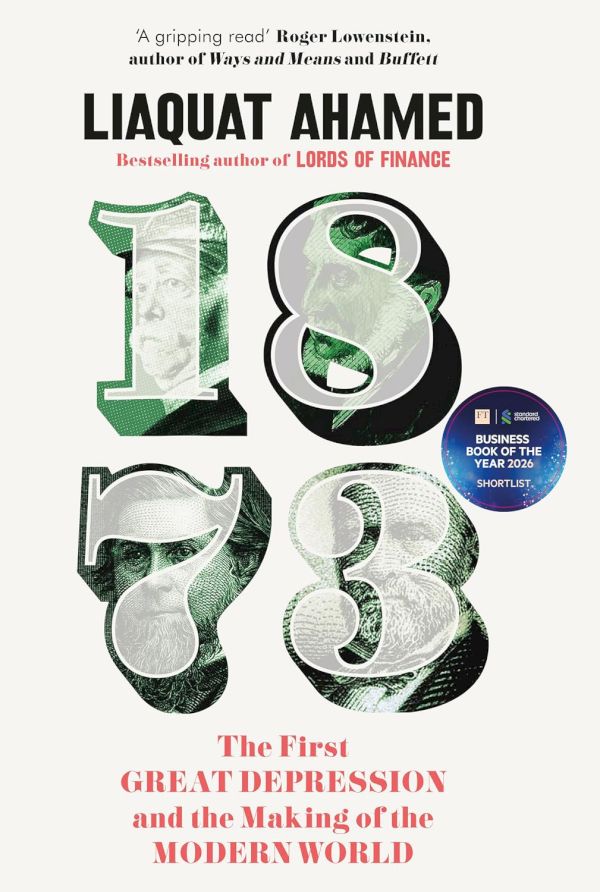
1873: The First Great Depression and the Making of the Modern World
This book is the second to be written by Liaquat Ahamed. He made his publishing debut back in 2009 with “Lords of Finance: The Bankers Who Broke the World”...

What Happened to Liberal Democracy? Remaking a Politics of Shared Prosperity
My mother didn’t go to university although she might well have done had not the Second World War intervened so that she joined the WAAF. She described her...

Broken China: How the Economic Miracle Shattered and What it Means for the World
China’s rise over the last several decades has been accompanied by an explosion in books seeking to explain its economy and way of doing business to...