Originally published in 2006 in The Business Economist, volume 37, issue 1. The original publication day is unrecorded.
Nicholas Carnot, Vincent Koen and Bruno Tissot, Palgrave Macmillan, 2005, xix + 325 pages, £65.00 (paper cover £22.50).
From The Business Economist, volume 37, issue 1 (2006).
This book successfully fills the void between specialist textbooks with a heavy statistical content and more general economics textbooks. As such, it is a useful addition to the armoury of economic forecasters and non-specialists alike who wish to better understand the field of economic forecasting.
The book can be split into two parts. For those wishing to refresh their approach to forecasting Chapters 4 through to 10 describe and discuss the most widely-used forecasting tools, covering time-series methods, macroeconomic modelling and financial and sectoral forecasting. The inclusion of a stand-alone chapter devoted to medium- to long-run forecasting clearly highlights the shift towards models that can capture supply-side issues such as population and technology within a growth-accounting framework and which can address concerns such as the ageing population.
The remaining chapters are somewhat self-contained and can be read in isolation, and are consequently more amenable to the non-specialist. Chapter 2 presents a refreshingly concise description of the complex national accounts framework that underpins macroeconomic forecasting before moving on to set out the virtues and limitations of macroeconomic forecasts: data revisions, annual chain linking and the complete disregard of environmental and welfare considerations when measuring growth.
Chapter 3 on incoming news and near-term forecasting is a must-read for any economic analyst or economic commentator as understanding and interpreting data is fundamental. It should certainly be read before you start forecasting.
The age-old issue of forecast accuracy and the idiosyncratic methods of measuring accuracy from a statistical standpoint – can it be done, how do you measure it and so what if you can? – is successfully tackled in Chapter 12.
The section on communication challenges interested me most in my capacity as a forecaster. Many users often treat economic forecasts as given and misuse or simply misinterpret what an economic forecast is saying. It is most helpful and refreshing to have a response to the scepticism that all forecasts are inaccurate, unhelpful or simply wrong. Conveying the uncertainty and risk surrounding a forecast will benefit users of forecasts no end.
On full reading, the book shows that economic forecasting is not simply a number-crunching exercise: judgement and experience combined with sound statistical methods underpinned by theory are needed to ensure consistency of story and a good forecast.
In summary, the book achieves what it sets out to do: it provides a useful compendium that will not go amiss in the offices of economic forecasters and policy makers alike.
Nick Stewart Experian Business Strategies Division
Hardback:
Paperback:
Archived source: 2006-07-03 website capture.
More Book Reviews
All Reviews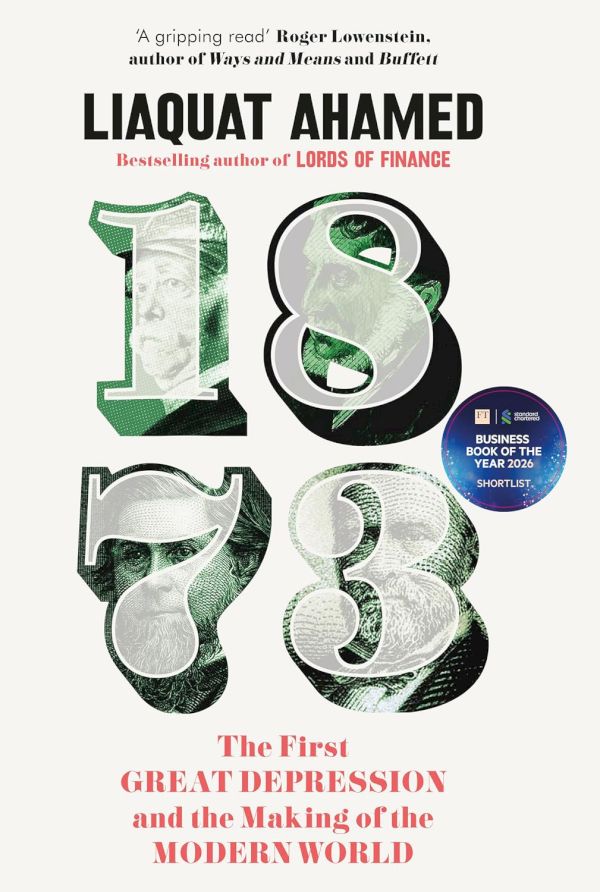
1873: The First Great Depression and the Making of the Modern World
This book is the second to be written by Liaquat Ahamed. He made his publishing debut back in 2009 with “Lords of Finance: The Bankers Who Broke the World”...

What Happened to Liberal Democracy? Remaking a Politics of Shared Prosperity
My mother didn’t go to university although she might well have done had not the Second World War intervened so that she joined the WAAF. She described her...

Broken China: How the Economic Miracle Shattered and What it Means for the World
China’s rise over the last several decades has been accompanied by an explosion in books seeking to explain its economy and way of doing business to...