Originally published in 2003 in The Business Economist, volume 34, issue 1. The original publication day is unrecorded.
David Smith, Profile Books, 2002, 282 pages, £8.99.
From The Business Economist, volume 34, issue 1 (2003).
“Once again David Smith has demonstrated his talent for opening up the world of economics and finance to a general audience” (Gordon Brown)
“David Smith skilfully cuts through the mind-numbing waffle that surrounds much of modern economics, delivering a highly accessible guide to a subject that many claim to understand but few do” (Jeff Randall)
‘Free Lunch is a guide to economics organised like a convivial meal with friends that will guide you through the mysteries of economics, leaving you nourished and enlightened’ (The publisher)
Well, that is quite an introduction! Let’s see if the first course matches these high expectations. 13 chapters, I see, ranging from ‘the appetiser’ (what is economics, why is such a book useful?) to ‘arguing over coffee’ (answers to some economic debates). Smith has high claims for his work: “this is a book about economics quite unlike any other, at a time when we all need to know some economics, some such knowledge is essential for modern living, it is intensely practical”. Glad to see he applauds economists: “the way that they think about and analyse problems in a logical way is useful in so many areas”.
On to the main course. The book covers two different areas. The first is a summary of basic economic ideas & theories – for example the division of labour, GDP statistics, the life-cycle hypothesis, the law of diminishing returns, comparative advantage, perfect competition on the Internet, and game theory. All are set out admirably in short sections with real life examples. The ideas are extended a little further, eg the uses of money, and then the seven stages of monetary policy in post-war Britain.
The second area is a useful biographical summary of some of the major economic thinkers. This is a little disappointing: good coverage of the mainstream 18th-20th century names in the UK and US, including the fact that David Ricardo ranks as the world’s richest economist! Just a shame that some of the European names are not covered; Smith himself apologises that “there is sadly not enough space in this book to do justice to Mises and Hayek”.
I rise from the meal refreshed, but a little empty. Akin to a Chinese meal perhaps where one feels hungry again a few hours later? An excellent book for someone who needs an initial overview, perhaps deciding whether to do economics at A level or degree level, or for a busy business man/woman wanting to know how economics might affect their business. The best parts to chew over are certainly towards the end, a series of short essays with a good bite to them: why are some countries richer than others, is globalisation a bad thing, are high taxes bad for you, is the euro a good idea, are we getting better off, what causes economic growth, why do we need low inflation, does manufacturing matter, and last but not least does economics make you happy?
Andrew Milligan Standard Life Investments
Archived source: 2003-10-18 website capture.
More Book Reviews
All Reviews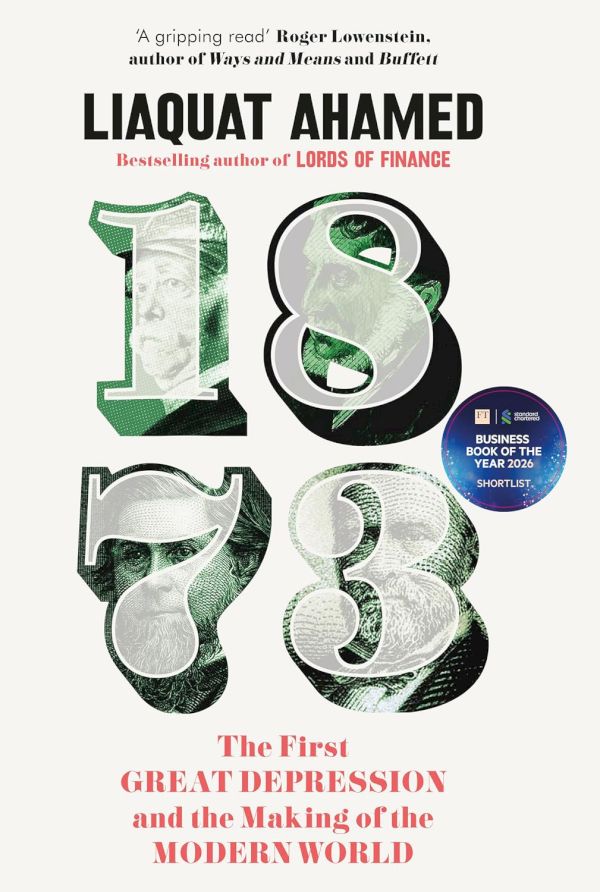
1873: The First Great Depression and the Making of the Modern World
This book is the second to be written by Liaquat Ahamed. He made his publishing debut back in 2009 with “Lords of Finance: The Bankers Who Broke the World”...

What Happened to Liberal Democracy? Remaking a Politics of Shared Prosperity
My mother didn’t go to university although she might well have done had not the Second World War intervened so that she joined the WAAF. She described her...

Broken China: How the Economic Miracle Shattered and What it Means for the World
China’s rise over the last several decades has been accompanied by an explosion in books seeking to explain its economy and way of doing business to...