Originally published in 2002 in The Business Economist, volume 33, issue 1. The original publication day is unrecorded.
Paul Strathern, Hamish Hamilton, 2001, ix + 342 pages, £14.99.
From The Business Economist, volume 33, issue 1 (2002).
Books on economics tend to lack popular appeal. Unlike their counterparts in business studies, which permeate airport, station and high street bookstalls, their readership is generally limited to those already studying the subject or engaged in its practice.
Paul Strathern’s Dr Strangelove’s Game – A Brief History of Economic Genius is, as its title suggests, different. It opens and closes with von Neumann’s attempts to persuade President Eisenhower to conduct a pre-emptive nuclear strike against the Soviet Union on the grounds that this was the only course consistent with game theory (hence the reference to Dr Strangelove). Using this as a framework, it traces in immensely readable and human terms the development of economic philosophy and its practical application, from the invention of double entry book-keeping in the 15th century to 1980s monetarism.
Strathern does this by devoting each chapter to the lives of one or more economists who have been associated with the seminal advances in the discipline, and tracing how their work influenced and changed the conduct of economic affairs. He interweaves historical background, philosophy and economics with the personal lives of his subjects, embracing in the latter such observations as the constructive effect on the bourgeois Engels of living with his “working class girlfriend…an illiterate Irish redhead” who showed him the slums which so influenced his deliberations. The result is effortless to read, fluent and frequently entertaining.
Strathern is a philosopher, not an economist, and this is occasionally evident, although the amount of economics in the content is high. And to achieve his purpose, he has to simplify and generalise, and some of his chosen subjects, such as Sen, have perforce to be treated briefly. But overall the balance is excellent. The treatments of Law, Schumpeter and Keynes are particularly good.
If there is a criticism it is that Strathern sometimes allows his usual objectivity to be clouded by (very humane) value judgement. This is most noticeable in his critique of Friedman, although he does conclude by commenting that “Keynes saw the world as he would like to see it; Friedman would argue that he sees the world as it is”. There are also a small number of minor errors, some of which may be the result of insensitive editing.
But these are quibbles. Strathern’s achievement is substantial, in an all-too-empty niche. The economics profession can only benefit if others follow him.
Donald Anderson
Archived source: 2002-05-09 website capture.
More Book Reviews
All Reviews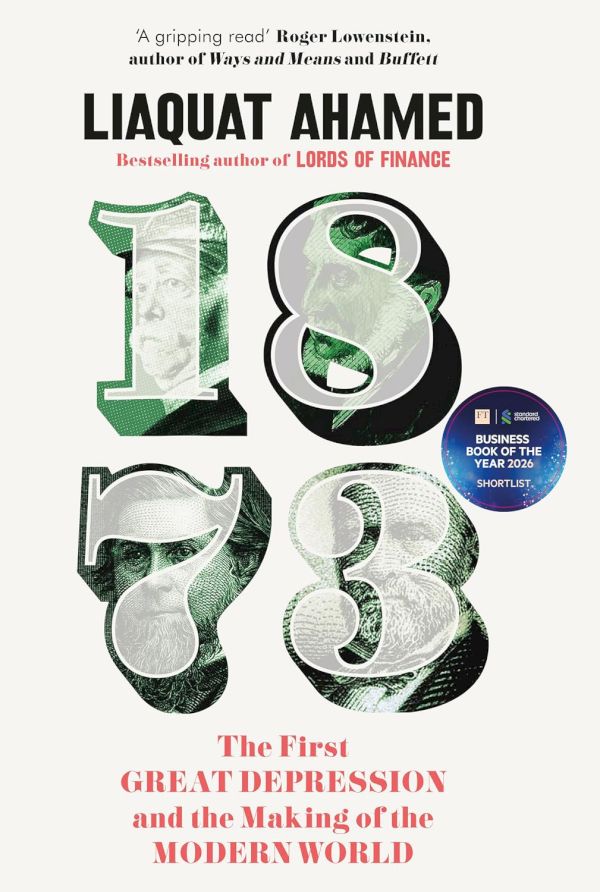
1873: The First Great Depression and the Making of the Modern World
This book is the second to be written by Liaquat Ahamed. He made his publishing debut back in 2009 with “Lords of Finance: The Bankers Who Broke the World”...

What Happened to Liberal Democracy? Remaking a Politics of Shared Prosperity
My mother didn’t go to university although she might well have done had not the Second World War intervened so that she joined the WAAF. She described her...

Broken China: How the Economic Miracle Shattered and What it Means for the World
China’s rise over the last several decades has been accompanied by an explosion in books seeking to explain its economy and way of doing business to...