Reviewer: Nicholas Crafts (University of Warwick).
Michael Barber, Politico’s Publishing, July 2007, 352 pages, £19.99.
Sir Michael Barber was head of Tony Blair’s Delivery Unit from 2001 to 2005. In this role he was described by Simon Jenkins of The Times as “the control freak’s control freak” (p195). The job entailed progress chasing on the achievement of a few key targets which were chosen by the Prime Minister for the Departments of Education, Health, Transport and the Home Office. The book explains how the author was successful in carrying out this brief. He emerges as an enthusiastic proponents of government targets and an assiduous (and almost naive) data collector.
For an economist reading this detailed and highly-entertaining account of life as an enforcer in Whitehall the point that emerges is how serious principal-agent problems are in the public sector and how difficult it can be to address them. Targets have improved matters somewhat since the days of ‘spend and hope’ but at the expense of a good deal of effort skewing and creative accounting. Nevertheless, the alternatives can be worse as is demonstrated by the hilarious description of the Health Department’s previous strategy of exhorting the professionals to improve Accident and Emergency departments as “assisted wheel re-invention” (p166). Barber is not slow to congratulate the Blair government for the progress it made in raising the standard of public services but even he describes this as a move from “awful” to “adequate” rather than from “good” to “great” (p238). The reason for this is clearly not inadequate expenditure but rather failures of organization and an inability to align producer interests with those of the taxpayer.
The book offers a very clear account of what Barber calls “deliverology”. This relates how the civil service departments were held to account and forced to improve performance on the key targets. The approach involved very regular performance reviews and refusal to accept excuses based on the (generally correct) assumption that under-performance reflected inadequate effort or ineffective managerial control. Not surprisingly, this did not always work; for example, the methods appear to have largely failed to deliver on road congestion where in the absence of road pricing and additional road capacity they were ineffective. Nevertheless, the Delivery Unit did have considerable success and this suggests that there is a massive public-sector productivity problem still to be addressed.
Barber’s final chapter offers his blueprint for continuing to improve the delivery of public services. He proposes the establishment of a new Department of the Prime Minister and Cabinet to oversee the implementation of public sector reform and to combine strategic vision with the oversight of meeting targets. This falls some way short of what an economist might want in terms of understanding of the subtleties of incentive structures and discussion of the “make or buy” issues in the provision of public services but might well be an improvement on the dysfunctional relations between 10 and 11 Downing Street which have undermined the reform of public services in the last ten years.
This book should be required reading for politicians while economists can benefit from the lesson that government failure deserves to be taken much more seriously than ‘Bob-the-Builder’ welfare economics allows.
Nicholas Crafts
University of Warwick
Archived source: 2008-08-13 website capture.
More Book Reviews
All Reviews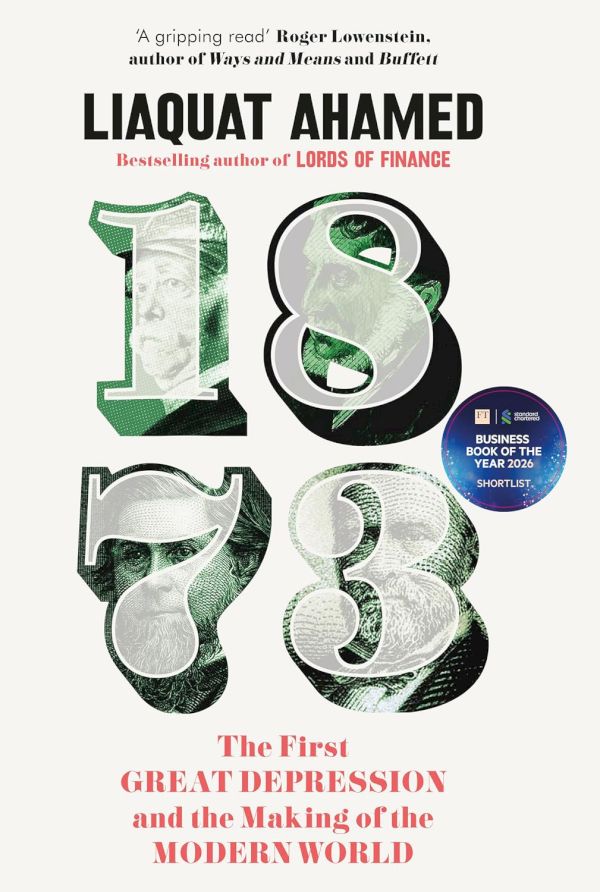
1873: The First Great Depression and the Making of the Modern World
This book is the second to be written by Liaquat Ahamed. He made his publishing debut back in 2009 with “Lords of Finance: The Bankers Who Broke the World”...

What Happened to Liberal Democracy? Remaking a Politics of Shared Prosperity
My mother didn’t go to university although she might well have done had not the Second World War intervened so that she joined the WAAF. She described her...

Broken China: How the Economic Miracle Shattered and What it Means for the World
China’s rise over the last several decades has been accompanied by an explosion in books seeking to explain its economy and way of doing business to...