Originally published in 2001 in The Business Economist, volume 32, issue 2. The original publication day is unrecorded.
Will Hutton and Anthony Giddens (eds), Vintage, 2001, xi + 241 pages, £8.99.
From The Business Economist, volume 32, issue 2 (2001).
The main title makes it easy to pick this book up believing it to be a thriller, ideal for bedtime or holiday reading. However, On the Edge is not of the Agatha Christie variety and is more a ‘who’s doing it’ rather than ‘whodunnit’.
Nor is this a collection of essays for easy bedtime or holiday reading. Each of the 10 contributions is from an eminent thinker, writer or participant (notes on contributors are on pp 225-6) and comes packed with facts and, very importantly, arguments. The latter question and stimulate the reader in both the specific and the general. Thus, whilst the early contributions from the likes of Paul Volcker and George Soros concentrate on the global financial system (including analyses of the recent crises), the later chapters explore topics such as inequality, the environment, child care, individualisation and culture.
In addition to the contributions, the book opens with a 51-page, roving debate between the editors to set the context. The discussion style, with Hutton making a point or raising a question ready for Giddens to respond and vice versa, is at the same time irritating and absorbing. The reader needs to remember who is writing what in order to follow the different lines of argument and check for consistency; but there is also the cut and thrust of the debate between two current UK ‘gurus’ (even though the dialogue seems a little manufactured at times).
It is an academic book (with sources and further reading provided by most contributors plus an index) but has been written for the interested layperson with some previous knowledge. The main lines of argument are complex and thought-provoking. Some of the contributions look for balance but this is not an overriding aim. On page 51, Hutton and Giddens agree that they have differences but are “.. on the same side”.
The success of the book lies in broadening the debate beyond the financial; in causing the reader to think about on how global capitalism affects people’s lives and what should be done to control its excesses. Other than the first and concluding chapters by the editors, this reflection is facilitated by each contribution being short (the longest is 23 pages) and independent of each other so that it can be a ‘pick up, put down, pick up again’ read.
Rob Thomas University of Portsmouth
Archived source: 2002-07-17 website capture.
More Book Reviews
All Reviews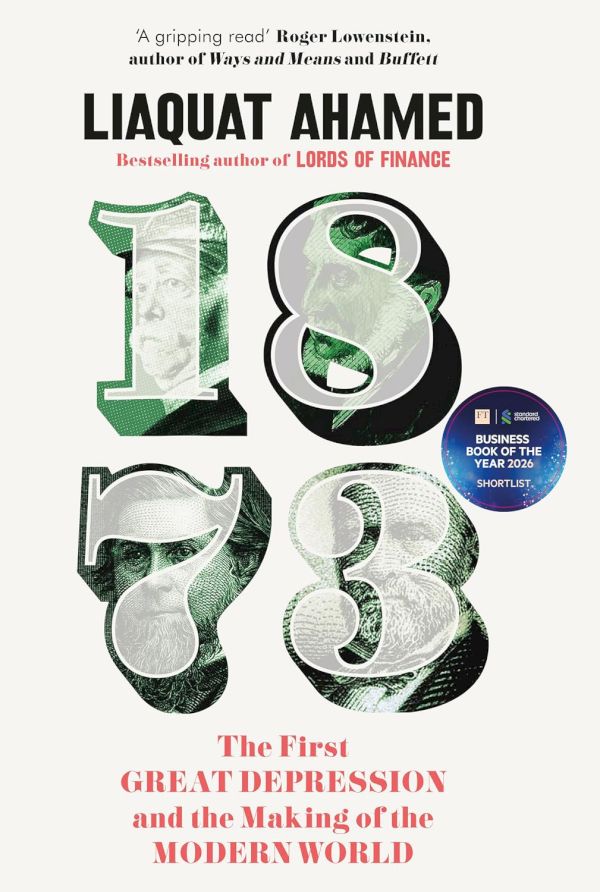
1873: The First Great Depression and the Making of the Modern World
This book is the second to be written by Liaquat Ahamed. He made his publishing debut back in 2009 with “Lords of Finance: The Bankers Who Broke the World”...

What Happened to Liberal Democracy? Remaking a Politics of Shared Prosperity
My mother didn’t go to university although she might well have done had not the Second World War intervened so that she joined the WAAF. She described her...

Broken China: How the Economic Miracle Shattered and What it Means for the World
China’s rise over the last several decades has been accompanied by an explosion in books seeking to explain its economy and way of doing business to...