Originally published in 2001 in The Business Economist, volume 32, issue 2. The original publication day is unrecorded.
John Sutton, MIT Press, 2000, xvi + 122 pages, £15.50
From The Business Economist, volume 32, issue 2 (2001).
Is it helpful or misleading to use a simple mathematical model to capture the essential features of messy and complex issues in economics? This is the ‘beginner’s question’ set by John Sutton as he sets out on an elegant and whimsical critique of the standard paradigm in economics: rational maximisers operate in markets and equilibria can be predicted that match observed outcomes. But be in no doubt, this short but subtly argued book encompasses the full scope of modern economic practice. It is full of insights and offers some comfort to the journeying economist who faces the task of reconciling theory and evidence to address forward-looking questions … or not as the case may be. In particular it emphasises the importance of formulating rival views capable of empirical testing.
The book is addressed to the intelligent sceptic who has ‘recently stumbled upon economics’, albeit one with knowledge of ‘how a successful theory based on formal mathematical models works’. IS, as we may call her, is presented with a tour guide that reviews how well the paradigm works, starting and ending with an anecdotally amusing and effective analysis of the failure of market deregulation in the San Diego airport taxi business, but also noting in passing the disappointing returns from the Keynesian/ monetarist synthesis of the 1960s.
Sutton decorates his arguments with a range of pertinent examples, many drawn from the nineteenth century, to highlight the class of economic issues that seem amenable to the standard paradigm and those that require a relaxation of the paradigm. Black-Scholes’s model of option pricing is explored as an example of a model where the predictions ‘work well’, as is the application of games theory to auctions (something that UK bidders for radio spectrum have recently discovered to their cost!). For an example that works less well, Sutton describes Carnot’s 1828 analysis of efficiency in a steam engine and shows how a ‘bounds’ approach can be used to better link concentration measures to advertising.
Why Marshall? In chapter 3 of Principles, Alfred Marshall argues that the most we can expect of economic analysis is that it captures the tendencies induced by changes and suggests that the movement of the tides is a better analogy for economic prediction than the movement of the planets. Sutton suggests that if even this were true then we would have seen as spectacular progress in economics over the past fifty years as we have seen in modelling the tides.
On more mundane matters, Sutton has not been especially well served by his proof-reader and publisher, with numerous spelling and numbering mistakes and some poor layouts.
Saxon Brettell Cambridge Econometrics
Archived source: 2002-07-17 website capture.
More Book Reviews
All Reviews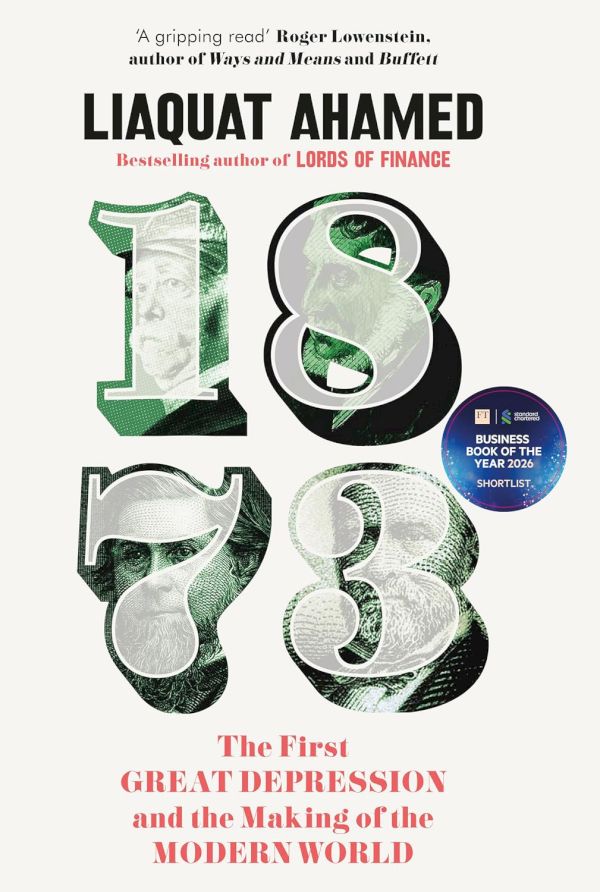
1873: The First Great Depression and the Making of the Modern World
This book is the second to be written by Liaquat Ahamed. He made his publishing debut back in 2009 with “Lords of Finance: The Bankers Who Broke the World”...

What Happened to Liberal Democracy? Remaking a Politics of Shared Prosperity
My mother didn’t go to university although she might well have done had not the Second World War intervened so that she joined the WAAF. She described her...

Broken China: How the Economic Miracle Shattered and What it Means for the World
China’s rise over the last several decades has been accompanied by an explosion in books seeking to explain its economy and way of doing business to...