Originally published in 2001 in The Business Economist, volume 32, issue 3. The original publication day is unrecorded.
David G Mayes, Liisa Halme and Aarno Liuksila, Palgrave, 2001, xii + 298 pages, £45.00.
From The Business Economist, volume 32, issue 3 (2001).
‘Banking supervision’ sounds innocuous but at its core lies something that could potentially impose great economic costs: state intervention in businesses and markets. This creates a challenge for the supervisors themselves. How can one minimise the overall costs of mitigating banking risk to the extent that society demands (or would rationally demand)? Obviously, this question is hard to answer. It is therefore valuable that Improving Banking Supervision challenges supervisors to adopt a blend of risk mitigation techniques that differs materially from traditional banking supervision.
Improving Banking Supervision describes the Nordic banking crisis of the early 1990s and draws lessons that are relevant to the issues now facing supervisors. It proposes a three-pronged model of supervision, involving high quality standards for banks (corporate governance, capital and reputation), disclosure that facilitates market discipline and robust exit policies (so that banks will run themselves in the knowledge of what will happen if they get into difficulty). The authors suggest that the Nordic banking crisis might have been less severe, had the Basel Accord already been implemented. Perhaps this in turn suggests caution in drawing lessons from that period. The book is nevertheless timely, given the debate on the revision to the Accord.
The main differences between the model proposed in Improving Banking Supervision and traditional banking supervision are an increased emphasis on corporate governance and on disclosure that produces market discipline, as well as a pegging back of support for failed institutions. These are ideas whose time has come. The UK’s new financial supervisor, the Financial Services Authority (FSA), requires the senior management of firms to take responsibility for ensuring that their firms follow the FSA’s high level principles . Market discipline is an important element of the proposed revision of the Basel Accord, and the internet enables firms to disclose full and up-to-date financial information. The FSA has stated publicly that it is not operating a zero failure regime, though the possibility of official support, which would be a matter for the Bank of England and HM Treasury has not been completely ruled out.
Taken together, these developments suggest that Improving Banking Supervision is worthy of attention from academics wanting to address highly topical issues (and draw on an extensive list of references), from supervisors redesigning their requirements and from firms commenting on the latest Basel proposals. But it is unclear whether the book’s proposals are feasible or superior to the status quo.
Depositor protection aside, the purpose of banking supervision is to offset banks’ lack of an incentive to take into account the huge social costs of bank failures. But bank managements do have an incentive (their jobs) to be prudent in normal times. Where that incentive outweighs others, such as the bonuses that might attach to winning gambles, excessive risk-taking is most likely to occur when banks first suspect they are in difficulty: are there mechanisms that can ensure prompt and reliable disclosures at that time? Given the furore about fair value accounting, and the slowness of change in accounting standards, will useful information be disclosed? How will the recipients of information enforce discipline on banks’ management? Distinctions between banking, insurance and securities business have become blurred. Transactions are structured to take advantage of differences in the regulation applying to the different sectors. Thus the FSA is developing an approach to supervision that covers all financial service firms. Would the book’s proposals have a greater chance of increasing systemic stability if they were not so focussed on ‘banks’? Is it clear that the book’s proposals will have lower costs or greater benefits than the status quo? Answering that last question is likely to be a challenge for any reader of the book, despite the authors’ advocacy!
Peter Andrews Risk Assessment Division, Financial Services Authority
Archived source: 2002-07-18 website capture.
More Book Reviews
All Reviews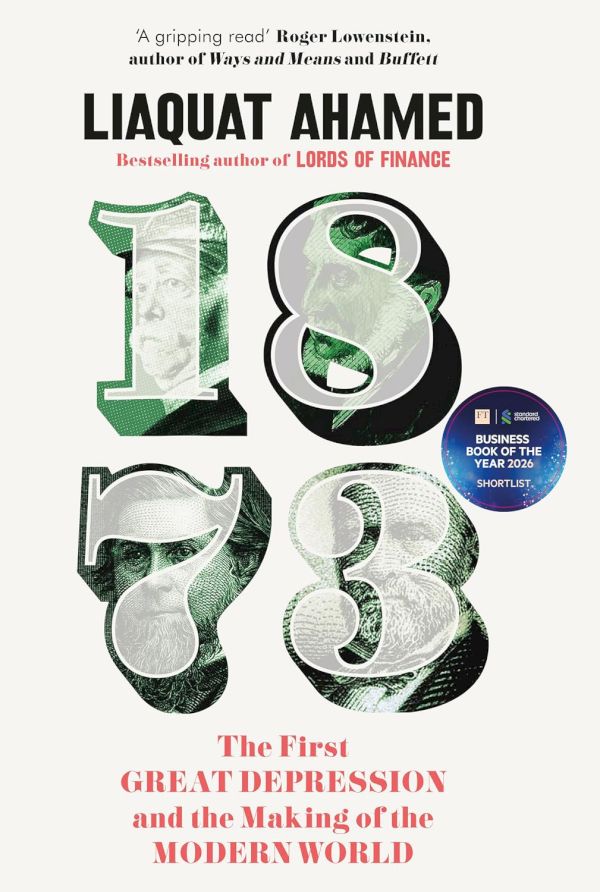
1873: The First Great Depression and the Making of the Modern World
This book is the second to be written by Liaquat Ahamed. He made his publishing debut back in 2009 with “Lords of Finance: The Bankers Who Broke the World”...
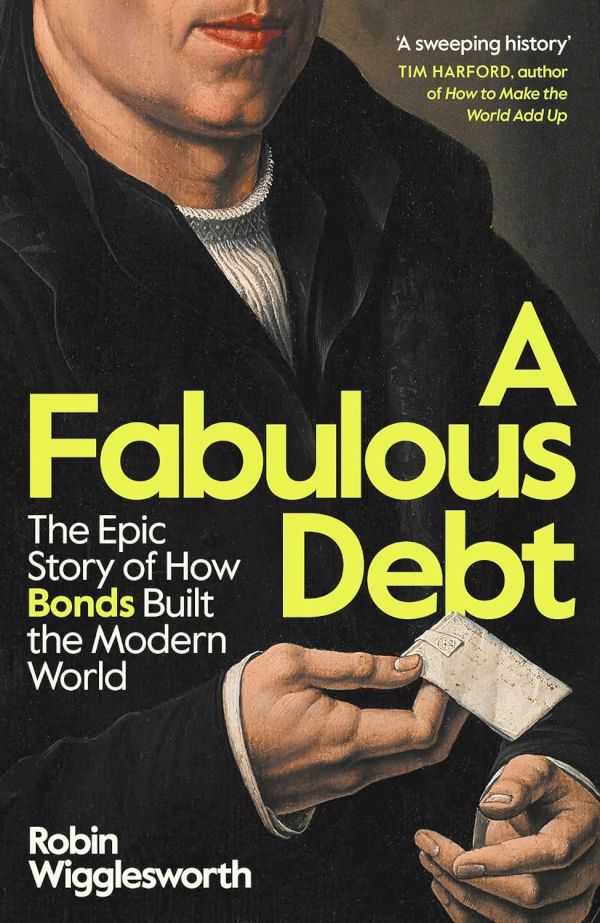
A Fabulous Debt: The Epic Story of How Bonds Built the Modern World
With global bond markets making headlines and bond yields at multi-decade highs, the new book by FT Alphaville editor Robin Wigglesworth, “A Fabulous...

Global Financial Regulation: An Opinionated Guide
Read the sub-heading of this book’s title again: “An Opinionated Guide”. This book lives up to this pitch. It is not simply a guide to many aspects of...