Originally published in 2003 in The Business Economist, volume 34, issue 1. The original publication day is unrecorded.
Rolf Jungnickel (ed), Palgrave Macmillan 2002, 191 pages, £50.00.
From The Business Economist, volume 34, issue 1 (2003).
Foreign-owned firms are generally regarded as a positive influence on an economy’s industrial structure and performance. This book is a series of papers that explore and indeed with some qualification collectively underline this basic premise.
Foreign-ownership can and generally does matter. It plays positive roles in sustaining job and wealth creation for host economies. However, as the differing approaches contained in this book demonstrate, it is more the presence of enterprises or affiliates with a global focus and within an integrated global supply chain or business network that seems to matter most. And here many UK and other EU national states have indigenous firms that too are truly global enterprises.
Automotive manufacturing in the UK is a high-profile example (automobiles are pivotal to our lives, jobs, and wealth) of the extent to which foreign-ownership does matter. It has helped to restructure the sector and the benefits of the multinational focus are clear. The UK has some of the most productive plants in the EU, significant and sustained investment in products, processes and innovation, it sustains over 230,000 manufacturing jobs and a major export orientation. However, the expected ‘spill-overs’ and networks have not guaranteed improved competitiveness and productivity in the whole sector. Moreover the potential for further restructuring is never off the agenda, as the UK is but one of a number of competing locations in a global market.
These then are some of the broad themes tackled in this book. As such it is a very useful resource for those interested in developing an understanding of why multinationals are different, the context they operate in, sources of their contributions to relatively superior performance vis à vis national firms and how to frame appropriate national strategies to attract and retain FDI. The book is a collection of five individual national reviews and studies from Austria, Germany, Sweden, France and the UK. Key aggregate measures of business and economic performance – trade, FDI, productivity, value added, wages, research and innovation – are evaluated over time and between foreign-owned and other firms. They were presented earlier (late 2000) by some prominent researchers in this area to a workshop with the same title sponsored by the Hamburg Institute of International Economics (HWWA). A useful editorial is included by Rolf Jungnickel, head of the research programme, ‘International Mobility of Firms & Labour’ at the Institute.
As expected from a book of this nature, the references provide a valuable guide to the current economic literature. The paper from M Pfaffermayr and C Bellak also includes a useful summary of the scope and results from earlier studies. In essence the book contributes three key aspects to this issue. These are critical perspectives on approach, measurement and data quality, a qualified yes to the positive role of multinationals and their relatively superior economic performance and lastly the inevitable agenda for further work. Overall then a valuable reference document on the current work in progress on this aspect of globalisation.
Robert Baker Society of Motor Manufacturers & Traders
I came away both disappointed and frustrated. The first half of the book deals with the causes of growth in capitalist economies in general. It argues that the role of technology is exaggerated in the standard accounts of economic growth and that far more attention should be given to the role of markets and particularly the growth of domestic markets in producing economic expansion.
This is true in many respects, although it is also well described in a number of classic works, notably those by Fernand Braudel. Indeed, Madrick draws on these in his descriptions. (Although this book has a strange attitude to footnotes – I had read more than two-thirds before I realised that there was a set of end-notes. Instead of these being referred to in the normal way, you had to guess whether there might be a note or not and then look for the relevant sentence in the text repeated at the back. I can’t see the point of this except that at least you realise later that the author has read the main texts.)
The particular take on market size which this author offers is a focus on the way in which it makes possible a standardisation of product and exploitation of economies of scale. The growth slowdown in the 1970s and 1980s is thus attributed to the rise of niche products, diversification and an end to effective mass media. The recovery in the 1990s is then the result of new standards – Microsoft, AOL and so on. There is clearly some important truth here, though perhaps it can be exaggerated.
However, in the last part of his book, Madrick argues that his thesis leads to some very particular policy prescriptions. I am not clear about these. He argues that there has been a neglect of social structures – education, healthcare, redistribution of income and wage levels – which continue to contribute to a fragmentation of the mass market and ‘whose buying power is too weak to sustain healthy growth’. So his remedy is higher taxation and more and bigger government. He would presumably be happy in Europe or maybe what Bush calls ‘Old Europe’.
He fails to point out with any clarity that the other implication of his views is imperialism. He does say that the EU, China and India offer a threat to American hegemony of the marketplace going forward. In his eyes this is a reason to concentrate more on the domestic market, but in other hands it is just as much a justification for keeping other nations in their place. It seems pretty clear which is the dominant conclusion at present!
Bridget Rosewell Volterra Consulting
Archived source: 2003-10-18 website capture.
More Book Reviews
All Reviews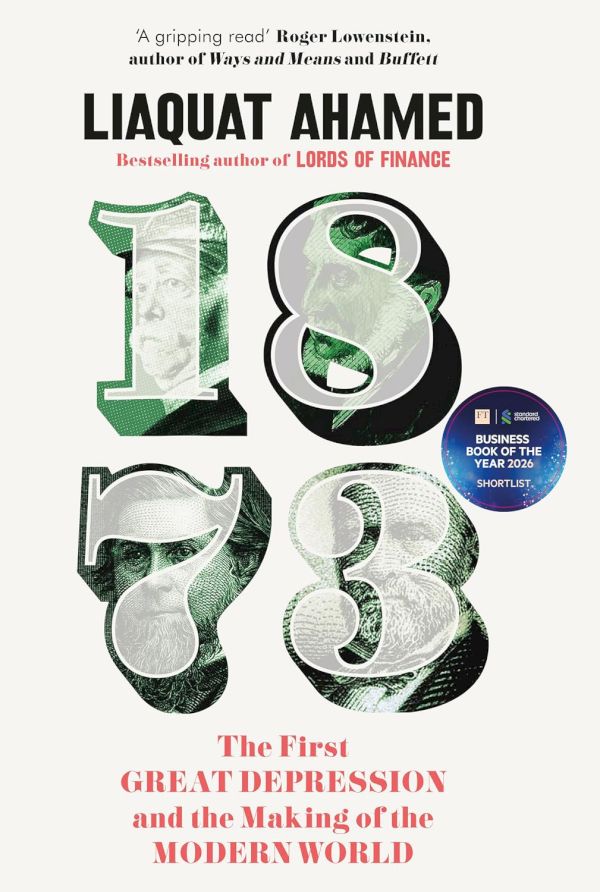
1873: The First Great Depression and the Making of the Modern World
This book is the second to be written by Liaquat Ahamed. He made his publishing debut back in 2009 with “Lords of Finance: The Bankers Who Broke the World”...

What Happened to Liberal Democracy? Remaking a Politics of Shared Prosperity
My mother didn’t go to university although she might well have done had not the Second World War intervened so that she joined the WAAF. She described her...

Broken China: How the Economic Miracle Shattered and What it Means for the World
China’s rise over the last several decades has been accompanied by an explosion in books seeking to explain its economy and way of doing business to...