Originally published in 2001 in The Business Economist, volume 32, issue 1. The original publication day is unrecorded.
Joshua Gans, (ed), Edward Elgar, 2000, xiv + 294 pages, £65.00.
From The Business Economist, volume 32, issue 1 (2001).
At first blush it is rather surprising to find a book published in the UK about publishing in economics journals to be solely a collection of articles published in US journals. However, that reflects a key feature of the economics journal market, that it is dominated not just by US journals but by a reasonably small number of such journals. These journals in turn are managed primarily by editors from a small number of top US universities. The affiliations of the authors follow a similar pattern. Not all of these issues are covered by the articles that have been selected but the general picture is clear. However, from a UK reader’s perspective it would have made sense to include at least some of the many articles that have been published on the subject in UK journals. They at least would consider additional issues like the relationships in the UK academic profession between publication and remuneration and between publication and the Research Assessment Exercise for UK universities.
Economics appears to be different from other academic professions in some respects over journal etiquette. In part this is in the refereeing process, over whether the author is not revealed to the referee (insofar as that is feasible from what is written) and whether the referee is revealed to the author. However, it also appears that the use of alphabetical ordering for authors’ names varies across disciplines, with alphabetical ordering being much more common in economics. The revelation of this fact does not then go into the reason. We do not find out whether typically authors in economics are largely equal in their contribution to articles or whether the trick, common in some professions, of the supervisor’s name appearing on the more junior colleagues’ articles is not common in economics.
Much of the discussion is very introspective but nonetheless important as academic success depends on this process. However, some of the articles are outright amusing and will provide good reading for those who have always thought that academic economists were pursuing a silly game of their own rather unrelated to the practical problems that economists in commercial and public practice face. The very beginning of the first article, written by Axel Leijonhufvud in 1973 gives the flavour: “The Econ tribe occupies a vast territory in the far North. Their land appears bleak and dismal to the outsider…their young are brought up to feel contempt for the softer living in the warmer lands of their neighbours such as the Polscis and the Sociogs.”
One of the articles, by David Hamermesh, gives advice to young authors on how to approach successful publication while another, written by the editor and George Shepherd, provides some solace by offering examples of path-breaking work that has initially been rejected, including work by Nobel laureates. However, there is no attempt to sum up from the articles included and give any assessment of the publication structure of the economics profession in helping to drive the subject forward in a useful manner or in helping the fair advancement of individuals within it. It is difficult to form a view about common prejudices, such as whether innovation is penalised compared to small steps forward with established models. A reflective note would have been helpful.
I suspect the outsider will have all their worst suspicions about academic economists confirmed when they read the article by David Laband and Michael Piette, entitled ‘The Relative Impacts of Economics Journals’, and discover it is not about which journals have actually shifted knowledge forward or resulted in some identifiable change in public or company behaviour but about the pattern of citations. Similarly, the main article in the section labelled ‘To Co-author or Not to Co-author’ is a theoretical model that explores whether alphabetical ordering of multiple authors’ names is a non-co-operative equilibrium – not exactly an answer to the question.
David Mayes Bank of Finland
Archived source: 2002-07-16 website capture.
More Book Reviews
All Reviews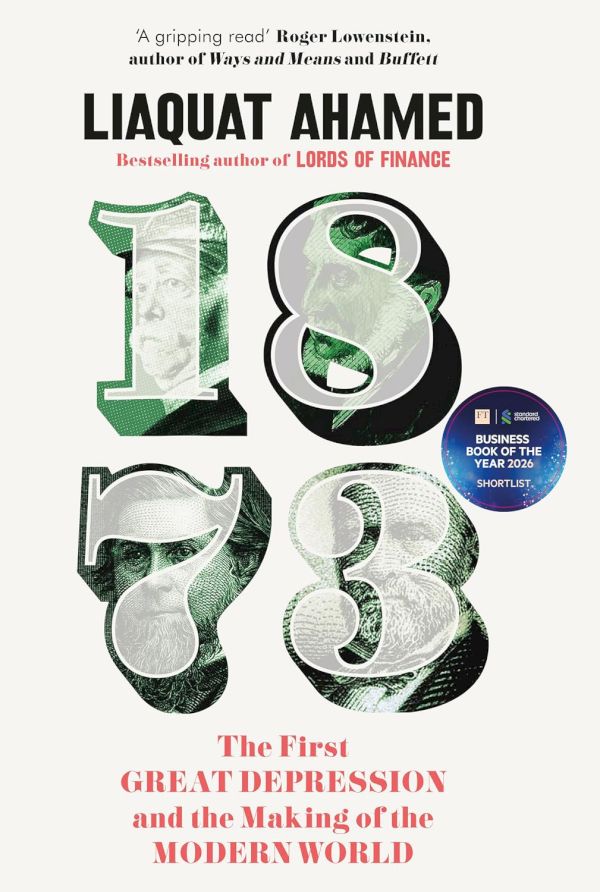
1873: The First Great Depression and the Making of the Modern World
This book is the second to be written by Liaquat Ahamed. He made his publishing debut back in 2009 with “Lords of Finance: The Bankers Who Broke the World”...

What Happened to Liberal Democracy? Remaking a Politics of Shared Prosperity
My mother didn’t go to university although she might well have done had not the Second World War intervened so that she joined the WAAF. She described her...

Broken China: How the Economic Miracle Shattered and What it Means for the World
China’s rise over the last several decades has been accompanied by an explosion in books seeking to explain its economy and way of doing business to...