Originally published in 2003 in The Business Economist, volume 34, issue 1. The original publication day is unrecorded.
A report by SMA Associates for Third Age Foundation, 2002, 61 pages, £15.00.
From The Business Economist, volume 34, issue 1 (2003).
Reading this report in the week of my 45th birthday, I was glad to see a question mark in the title. With almost 1 in 3 British men aged 50-64 jobless – compared with just 1 in 10 a generation ago – the prospect of being a potential victim of ageism is daunting. It was somewhat consoling therefore to discover that the spin given to this interesting report for Third Age Foundation is a tad overdone. Although the report claims to provide ‘groundbreaking evidence’ of age discrimination in employment, what it actually does is highlight various problems faced by disadvantaged older people in the labour market – which is not entirely the same thing.
The authors interviewed 102 job-seekers aged 40 or older, all clients of two voluntary organisations in Bristol and London providing help with personal development or information technology skills. Interviews were also carried out in London with public, private and voluntary sector employers involved in regeneration and workforce development programmes.
The findings point to a mixture of both discriminatory and non-discriminatory barriers facing the job seekers consulted. Many suffered a combination of financial, housing and health problems; coupled with low self-esteem this limited their confidence and the effectiveness of job search. These barriers stand between older workers and employment regardless of any discrimination by employers; which explains why the authors find it difficult to pinpoint actual examples of ageist practice against the job-seekers they interviewed. But the report does unearth signs of crude age stereotyping by some employers.
Having agreed to the EU general anti-discrimination directive the UK must by 2006 regulate to ensure that employers do not treat older people unfairly in this way, and the clamour for regulation has gained added impetus given the need to keep older people in work as part of the response to mounting pensions pressures. The authors of Past it at 40? want ministers to act well before 2006. However, the government’s decision to consult on how best to proceed seems wise. As the report itself concludes with its wide-ranging set of recommendations, multiple factors interact to limit job opportunities for older people and a range of measures is thus needed to overcome the age barrier at work.
John Philpott Chief Economist, Chartered Institute of Personnel and Development
Archived source: 2003-10-18 website capture.
More Book Reviews
All Reviews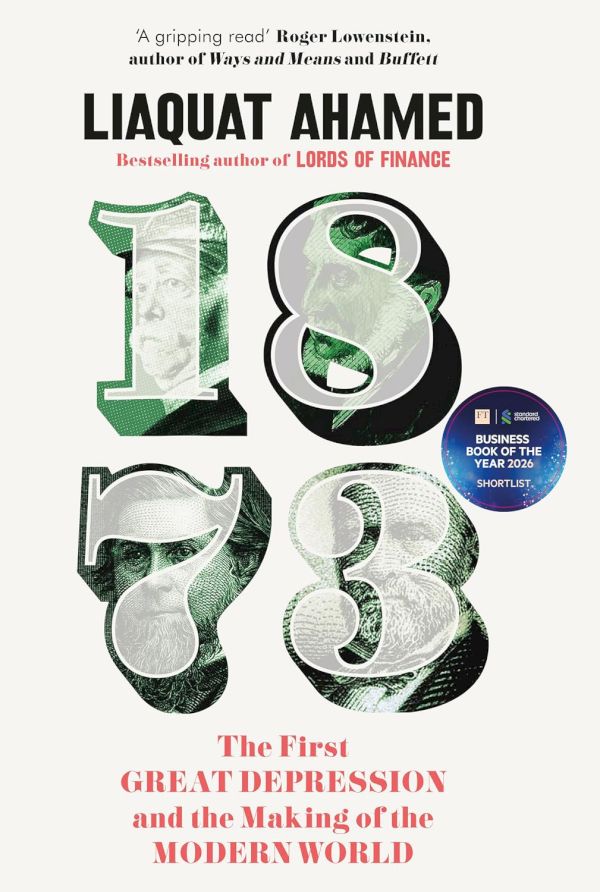
1873: The First Great Depression and the Making of the Modern World
This book is the second to be written by Liaquat Ahamed. He made his publishing debut back in 2009 with “Lords of Finance: The Bankers Who Broke the World”...

What Happened to Liberal Democracy? Remaking a Politics of Shared Prosperity
My mother didn’t go to university although she might well have done had not the Second World War intervened so that she joined the WAAF. She described her...

Broken China: How the Economic Miracle Shattered and What it Means for the World
China’s rise over the last several decades has been accompanied by an explosion in books seeking to explain its economy and way of doing business to...