Originally published in 2003 in The Business Economist, volume 34, issue 2. The original publication day is unrecorded.
Kees van der Heijden, Ron Bradfield, George Burt, George Cairns and George Wright, Wiley, 2002, 307 pages, £19.99.
From The Business Economist, volume 34, issue 2 (2003).
This book is a product of the Centre for Scenario Planning and Future Studies at the University of Strathclyde Graduate School of Business Studies. The first-named author is director of the Centre and his coauthors are principals there. The book draws on a large body of research done at the Centre and at the same time serves to promote its ideas and to help sell its services to organisations. It is aimed at senior managers who can determine or at least influence the future of the organisations where they work.
The main title of the book appears to have been chosen for its impact rather than meaning. ‘The Sixth Sense’ is defined as the ability to detect which ‘dot on the horizon’ will have a critical impact on your business and which can be happily ignored: is it a windsurfer or a super-tanker on a collision course at 20 knots? In business terms it means using scenario planning effectively to ensure the growth of the organisation, but without those three words the title would have been unlikely to appeal to its target audience.
The book is structured into eight chapters, which are intended to function as a comprehensive guide for business managers, from Preparing for the Future to Scenario Planning: Taking Charge of the Future. It covers many practical examples of the use of scenario planning, from the pioneering work of Royal Dutch Shell and the Club of Rome’s controversial report on Limits to Growth to more recent examples like Nokia, and the examples of theoretical scenario planning exercises carried out by the Centre.
Business economists have always had an essential role to play in scenario planning because any scenario has to be based on a set of assumptions about international and national economic trends. How detailed these assumptions are and how much work goes into developing them does, of course, vary greatly. The authors put economics into the STEEP framework (Social, Technological, Economic, Ecological and Political) for gathering information essential for forming business strategies. They make the valid point (to us as economists as well as to business managers) that these factors should be examined in combination not in isolation. They also recognise that there are limits to how far this rationalistic approach can take you.
For young economists going to work in large organisations where scenario planning is used, the book will provide a valuable guide to what is (or should be) happening about them and where what they are asked to do fits in.
Coming from an academic institution the book includes references, an index and a glossary (running from Abilene Paradox to Waiter’s Dilemma) which is worth reading in its own right.
David Kingston Expert Training Systems plc
Archived source: 2003-12-22 website capture.
More Book Reviews
All Reviews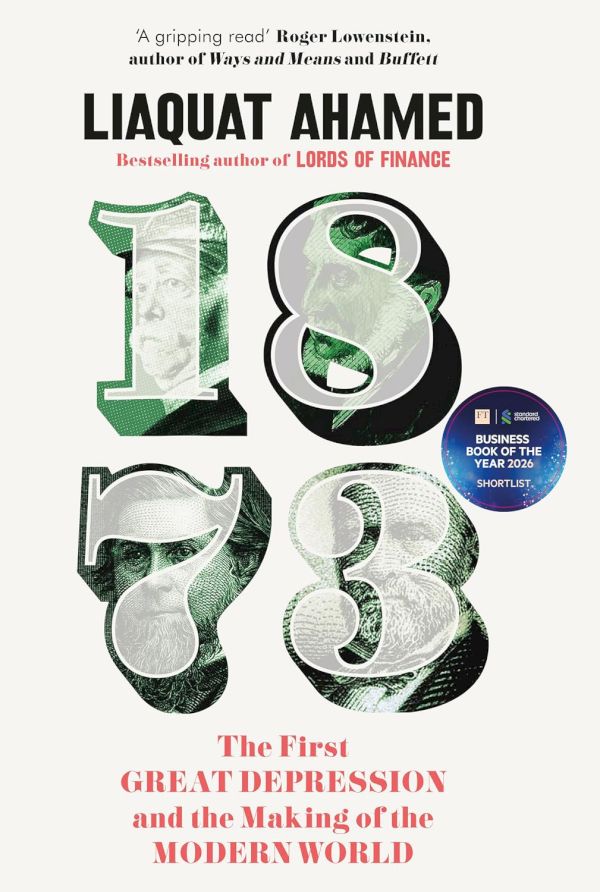
1873: The First Great Depression and the Making of the Modern World
This book is the second to be written by Liaquat Ahamed. He made his publishing debut back in 2009 with “Lords of Finance: The Bankers Who Broke the World”...

What Happened to Liberal Democracy? Remaking a Politics of Shared Prosperity
My mother didn’t go to university although she might well have done had not the Second World War intervened so that she joined the WAAF. She described her...

Broken China: How the Economic Miracle Shattered and What it Means for the World
China’s rise over the last several decades has been accompanied by an explosion in books seeking to explain its economy and way of doing business to...