Originally published in 2001 in The Business Economist, volume 32, issue 2. The original publication day is unrecorded.
Rudi Dornbusch, MIT Press, 2000, 357 pages, £19.50.
From The Business Economist, volume 32, issue 2 (2001).
This book consists of 49 essays written since 1994, the majority of which have appeared in Business Week, The Wall Street Journal, Financial Times and similar publications. There are a few longer essays “that have appeared or will appear in various books” (author’s Preface). Topics cover international trade, global financial markets, currency unions, the outlook for individual countries such as Mexico, Brazil, Japan, China and Korea, and what are the dangers in equity investment abroad.
Because of their sources and dates, most of the essays are ephemeral in nature. Three pages on ‘Why the Mighty Mark is a Sitting Duck’ in Business Week might have been a good read on a train journey in 1994, but does it merit a reappearance between hard covers 7 years later? Likewise, ‘Euro Realities, Fantasies, and Problems’, 15 pages first published in 1996. The author’s contribution to thought on EMU that “it could become a really gigantic screw-up and whenever that happens, Europe gets into political trouble and that is always expensive for the world” could (conceivably) have been useful for students in the US (with no apologies to them) at the time it was written, but is of no value to a business economist today.
The question remains whether because of the particular approach of the author, or even because of the style of his writing, these essays are a good read, almost irrespective of their content. Other reviewers have found that they are. “He is deep, witty and entertaining.” “The result ….is a model of applied economic thinking.” “Rarely is the discussion of economic policy both so perceptive and so much fun.” One reviewer found the book hard to put down: I found it impossible to continue reading. One example should suffice: “Nations like to have their own money for many reasons. First and prominent is nationalism. A country has its flag, its airline, and its money. They are part of its culture and identity. Printing money is also a source of funding for governments. They can pay out more to their political constituencies by letting their printing presses run. Monetary policy, exercised through adjustments in interest and exchange rates, can also be valuable by providing flexibility to offset shocks to the economy.”
Sadly, I find I cannot recommend this book, even as a ‘dipping into’ read. Why sad? Because I believe that his prescriptions on free markets and his view that it is governments which are frequently at the root of economic troubles are in the right direction. But that is another story.
Peter Gordon-Potts
Archived source: 2002-07-17 website capture.
More Book Reviews
All Reviews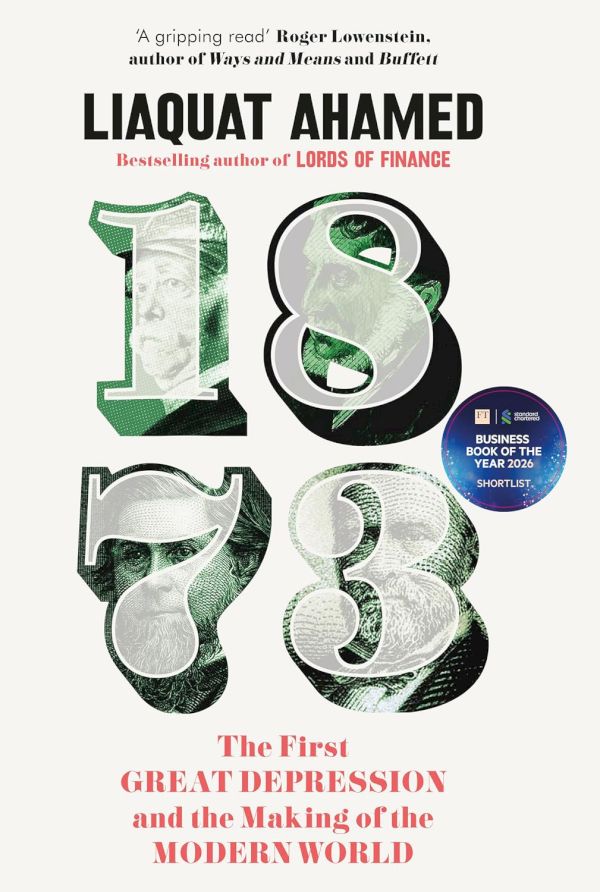
1873: The First Great Depression and the Making of the Modern World
This book is the second to be written by Liaquat Ahamed. He made his publishing debut back in 2009 with “Lords of Finance: The Bankers Who Broke the World”...

What Happened to Liberal Democracy? Remaking a Politics of Shared Prosperity
My mother didn’t go to university although she might well have done had not the Second World War intervened so that she joined the WAAF. She described her...

Broken China: How the Economic Miracle Shattered and What it Means for the World
China’s rise over the last several decades has been accompanied by an explosion in books seeking to explain its economy and way of doing business to...