Originally published in 2001 in The Business Economist, volume 32, issue 3. The original publication day is unrecorded.
Russell Roberts, MIT Press, 2001, 271 pages, £15.95.
From The Business Economist, volume 32, issue 3 (2001).
The author is John M Ohlin Senior Fellow at the Murray Weidenbaum Center on the Economy, Government and Public Policy at Washington University, St Louis. It is easy to tell that he is an economist from the list of books and sources which he suggests for further reading. These include various books of Milton Friedman, Frederic Bastiat’s Selected Essays on Political Economy, two major books of Hayek, The Wealth of Nations and The Theory of Moral Sentiments by Adam Smith, the BP/Amoco Statistical Review of World Energy and Historical Statistics of the United States, Colonial Times to 1970. And many more.
Dr Roberts has taken the writing of this novel very seriously. He states, with candour, that “This book got rejected a lot in its early and late incarnations”, it took 5 years to evolve, and the author gives the names of no less than 53 persons whom he has consulted. Too many drafts and too many consultations may have killed whatever style may initially have been present.
The two main characters, Sam aged 30 and Laura aged 24, are newly-appointed teachers, he of economics and she of literature, at a private high school. They meet, chat, and – eventually – kiss, but that’s it. Sam does practically all the talking and his conversation is confined to expounding the benefits of a free-market economy and the dangers of regulation.
On an early date with Laura, one of his chat-up lines is: “And the marketplace channels our nature in a way that serves others. That’s the lesson of Adam Smith, the author of The Wealth of Nations.” Before the end I had formed the impression that he was an insufferable bore.
There is a sub-plot to do with regulatory authority whose head, a lady, is determined to bring a ruthless CEO to justice. His closure of an Ohio plant and relocation in Mexico gives her the opportunity. It also gives our free-market hero the opportunity to express his views, which he does rather expansively.
Judged as a novel, this book fails completely. Its structure is merely a vehicle for the author to develop his beliefs. It might be described as a socratic dialogue, but is too much of a monologue to qualify.
We must therefore judge this book as an economic text, pure and simple. I can see the author’s intentions: to sweeten the pill of economic theory with a coating of romance. But the story line is so poor, the characterisation so weak, and the writing so turgid, that the pill has no effective coating at all. So what about the economics? Here, I believe that the author argues his case cogently and well. He draws on a wide variety of products and events, such as: air bags, and should we be free to de-activate them; the transportation of convicts to Australia; why shops never run out of bagels; and the best way to manage the number of elephants in Zimbabwe and what happened when wolves were eradicated from the Yellowstone National Park.
There’s a good textbook of applied, albeit opinionated, economics waiting to be written with this material. Roberts should write it one day. Until then, I would commend what we have to students. It would certainly act as counterweight to any interventionist, left-leaning tendencies in their other texts. But I would add a health warning. Sam lost his job because the governors of the school were concerned about his radicalism. Students, beware!
Peter Gordon-Potts
Archived source: 2002-07-18 website capture.
More Book Reviews
All Reviews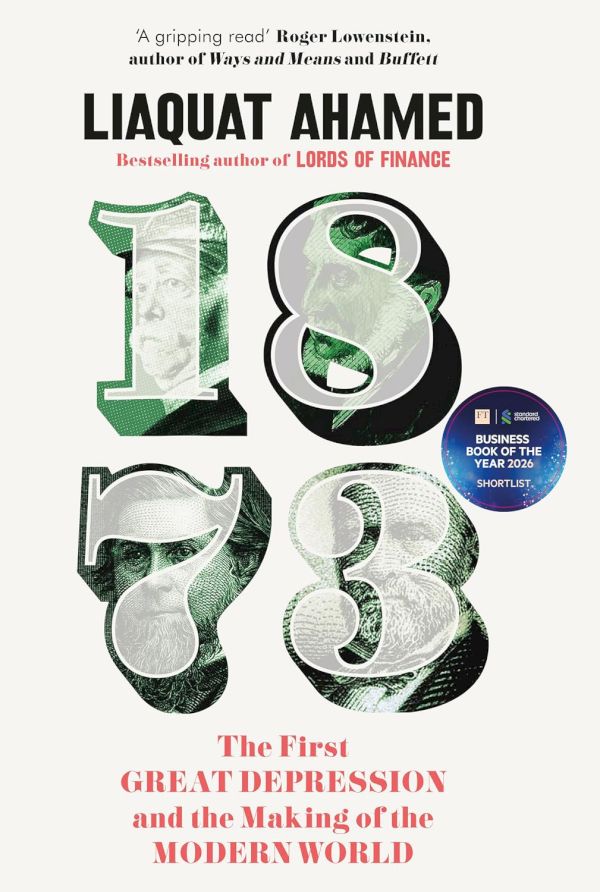
1873: The First Great Depression and the Making of the Modern World
This book is the second to be written by Liaquat Ahamed. He made his publishing debut back in 2009 with “Lords of Finance: The Bankers Who Broke the World”...

What Happened to Liberal Democracy? Remaking a Politics of Shared Prosperity
My mother didn’t go to university although she might well have done had not the Second World War intervened so that she joined the WAAF. She described her...

Broken China: How the Economic Miracle Shattered and What it Means for the World
China’s rise over the last several decades has been accompanied by an explosion in books seeking to explain its economy and way of doing business to...