Originally published in 2002 in The Business Economist, volume 33, issue 1. The original publication day is unrecorded.
Ros Jay, Prentice Hall, 2001, 182 pages, £9.99.
From The Business Economist, volume 33, issue 1 (2002).
The obvious retort to the title of Ros Jay’s book How to win a pay rise is be worth it! Fortunately this point is recognised and addressed from the start. The first half of the book devotes itself to the issue of how to be worth it, covering in light-hearted style how to up-grade your skills, improve your personal profile, work more effectively, be more creative and generate success. While a lot of this section may appear common sense, I doubt that any of us in the economics profession do all the sensible things regularly and well! When was the last time that you took time out to plan success or used drawing techniques to boost your creative powers?
The book also makes the key point that these techniques are not only important in raising your true worth to the organisation but more importantly will help ensure that it is recognised by an employer. After all it is not your own evaluation of your performance that matters but that of your boss. Taking steps to raise their evaluation of your worth is half the battle in securing that elusive rise. The underlying message is that your boss must believe that any rise is not only justified by current productivity levels but is likely to spur further gains for his/her department in the future. After all any economist will tell you that productivity-related pay is not inflationary!
Once a rise is deserved the other half of the battle is to know exactly how best to ask for it. This section of the book gives useful advice on deciding the most opportune time to put in a request. For example, it is often advantageous to pre-empt the regular pay review in order to avoid being presented with a fait accompli! Quantifying how much you can really justify and handling the negotiation process are also important, as objections from management are highly likely at this stage. As such, the section on overcoming typical negative responses like ‘its not in the budget’, ‘that’s too much’, or ‘or my boss won’t agree to it’ are amongst the most useful in the book.
If there is a criticism to make it is probably that much of the advice and many of the techniques provided should really be common sense. But in this weakness is also the book’s primary strength. It sets out an approach whereby the basics can be built upon in concert and consistently to achieve an outcome that we all seek at one time or another. I for one will be keeping my copy handy!
Steve Pearson Halifax Group Treasury
Archived source: 2002-05-09 website capture.
More Book Reviews
All Reviews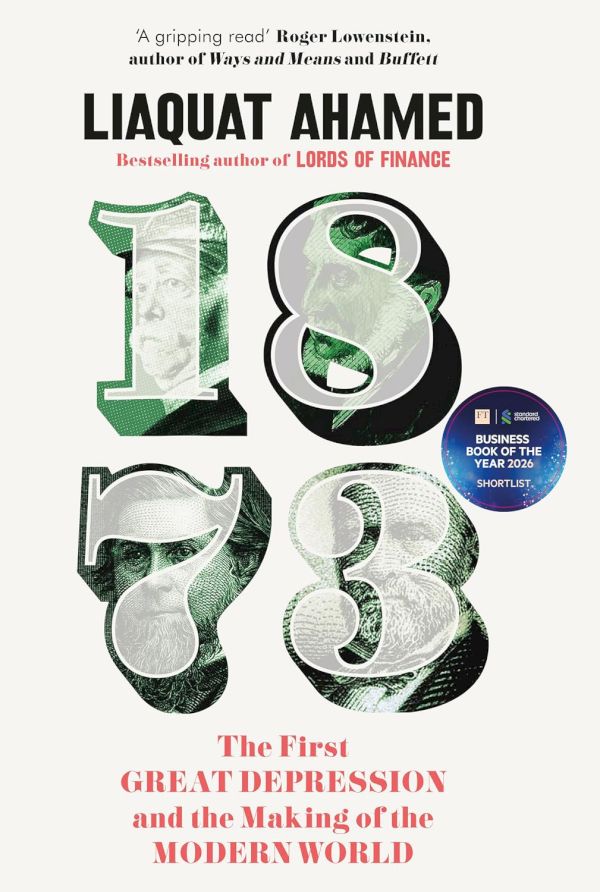
1873: The First Great Depression and the Making of the Modern World
This book is the second to be written by Liaquat Ahamed. He made his publishing debut back in 2009 with “Lords of Finance: The Bankers Who Broke the World”...

What Happened to Liberal Democracy? Remaking a Politics of Shared Prosperity
My mother didn’t go to university although she might well have done had not the Second World War intervened so that she joined the WAAF. She described her...

Broken China: How the Economic Miracle Shattered and What it Means for the World
China’s rise over the last several decades has been accompanied by an explosion in books seeking to explain its economy and way of doing business to...