Originally published in 2005 in The Business Economist, volume 36, issue 2. The original publication day is unrecorded.
Sebastian Mallaby, Yale University Press, 1995, 462 pages, £19.95.
From The Business Economist, volume 36, issue 2 (2005).
A brilliant account of the World Bank and Jim Wolfensohn, its outgoing president, this fascinating book should be read by everyone interested in poverty, failed states, and global politics. Beautifully written, Mallaby’s story tells us the tale of the bottom billion and the fight against poverty led by the world’s most powerful development institution. That fight seems to have achieved preciously little in meeting the Millennium Development Goals: despite the World Bank’s annual volume of loans and grants of around US$20 billion, more than three million people still live on less than US$2 a day and few have access to clean water, health services and education.
That Wolfensohn lacked passion can hardly be claimed – in fact, sometimes there seems to have been too much of it rather than too little, as some of Mallaby’s anecdotes suggest. Having waited for one and a half decades to crown his highly successful investment banking career with the top job at the World Bank, Wolfensohn, the egocentric Renaissance man with the world’s largest Rolodex, was in a hurry to re-shape an institution that was widely seen as sluggish and bureaucratic. Immediately after taking over the helm, he set out to woo the Bank’s NGO antagonists, spearheaded debt relief efforts for the poorest countries, put corruption on the Bank’s agenda and moved quickly to ensure a leading role for the Bank in the Bosnian peace deal – episodes Mallaby describes in a highly intriguing and sometimes humoristic way.
So why hasn’t more been achieved? As Mallaby argues, a key reason lies in Wolfensohn’s newly introduced development strategy, which, he finds, was actually far from original. Rather than providing a comprehensive framework, this strategy included some subjects that in truth were marginal, such as cultural heritage, and some subjects that were bitterly divisive on the Bank’s board, such as religion. Interestingly, Mallaby’s views have recently been echoed by the Bank’s own Operations Evaluation Department, whose hard-hitting report finds that the Bank has done too little on promoting growth and concentrated too much on social policies.
A second reason has to do with stakeholder management. While Wolfensohn spent substantial efforts on rebuilding the Bank’s relationship with shareholders, NGOs and borrowers, Mallaby counsels that he should have been more sensitive to the trade-offs between them. But perhaps the goal where Wolfensohn scores worst on is the managerial and structural change of the Bank itself. Specifically, as Mallaby argues, Wolfensohn failed to recognise that the Bank’s DNA was largely reformresistant; burning up so much time and energy on shaking up this system diverted substantial resources and in the end proved counter-productive.
Wolfensohn’s successor, Paul Wolfowitz, inherits an institution that continues to face important challenges. After 60 years of operation, the World Bank is endangered, as Mallaby writes in the May/June 2005 issue of Foreign Affairs. Waking the world up to the risk of losing the Bank at a time when it is more needed than ever will be Wolfowitz’s most critical task. He will be well advised to read the World’s Banker in fulfilling this task.
Peter Cornelius Royal Dutch/Shell
Hardback:
Paperback:
The Handbook is a collection of ten papers by academics and practitioners (both legal and economic) providing a review of the economics, empirical evidence and standards of legal evaluation of competition and competition policy in the market economy. In spite of the seemingly limitless scope of its title, the Handbook manages to provide a review of these central themes that is fairly well-focused and accessible to the lay-reader. If I have a criticism of the Handbook, it is that – in common with many other edited volumes with numerous contributors – it would benefit from clearer focus still (I found myself repeatedly referring back to Neumann and Weigand’s introductory chapter to provide a road map of what I was reading). On balance, though, I do not feel this criticism significantly detracts from an enjoyable and thought-provoking read, albeit one that may be best enjoyed by considering each chapter on its individual merits rather than as part of a coherent story about competition and competition policy.
Of the ten papers, five discuss the economics of competition policy (addressing issues of theory and measurement) and five its application in law (addressing issues of principles and application). My favourite paper, and the one I think will be of most interest to SBE members, is Dennis Mueller’s empirical examination of whether mergers tend to increase efficiency or whether they are undertaken primarily to increase market power (or otherwise decrease efficiency): Mueller concludes the latter, suggesting there should be a strong presumption in law against mergers rather than in their favour. This paper should be recommended reading for any professional advisers representing merging parties in front of the Office of Fair Trading or Competition Commission!
On the downside, in my view insufficient consideration is given to highlighting the differences and similarities (in terms of the economics, empirical evidence and standards of legal evaluation that are the Handbook’s central themes) between the twin pillars of competition policy: antitrust (specifically busting ‘trusts’, ie cartels, and preventing abuse of dominance) and merger control. This is a pity because many of the issues addressed in the book may best be examined by comparing the implementation of competition policy in merger control with its implementation in antitrust (eg rule- versus discretion-based application of competition law).
Further, the discussion in Chapter 6 of alternative (discretion-based) substantive tests in merger control is now out of date: the question of whether the European Commission’s (EC) old test of whether a merger “creates or strengthens a dominant position” is preferred to the substantive test in the US (and the UK) of whether a merger “substantially lessens competition”, though interesting, has been superseded with the EC’s new test of whether a merger creates “a substantial impediment to effective competition”.
Dr Christopher Walters Competition Commission
Hardback:
Paperback:
Archived source: 2006-05-26 website capture.
More Book Reviews
All Reviews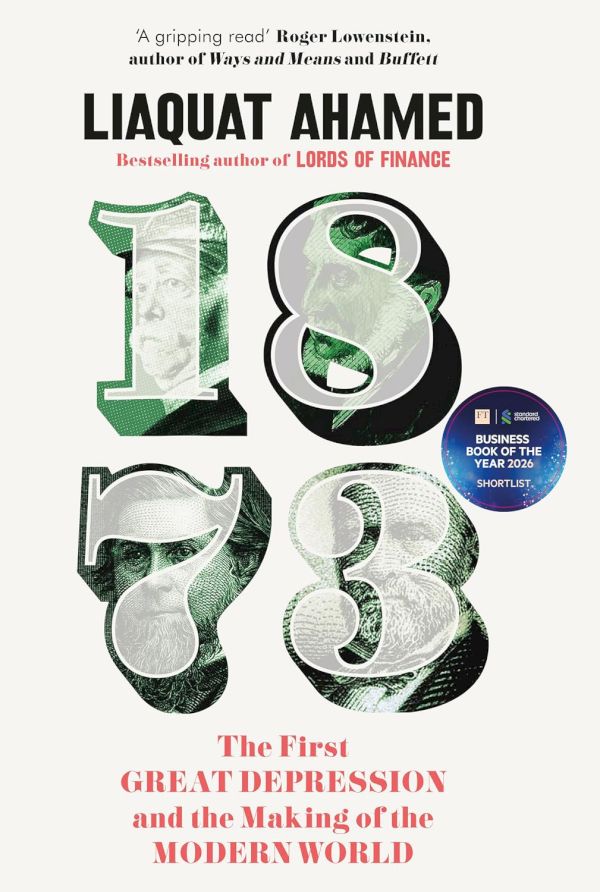
1873: The First Great Depression and the Making of the Modern World
This book is the second to be written by Liaquat Ahamed. He made his publishing debut back in 2009 with “Lords of Finance: The Bankers Who Broke the World”...

How to Invest: Navigating the Brave New World of Personal Investment
This book provides a lively summary of the latest research into how to invest in an uncertain world, infused with the extensive hands-on experience of the...
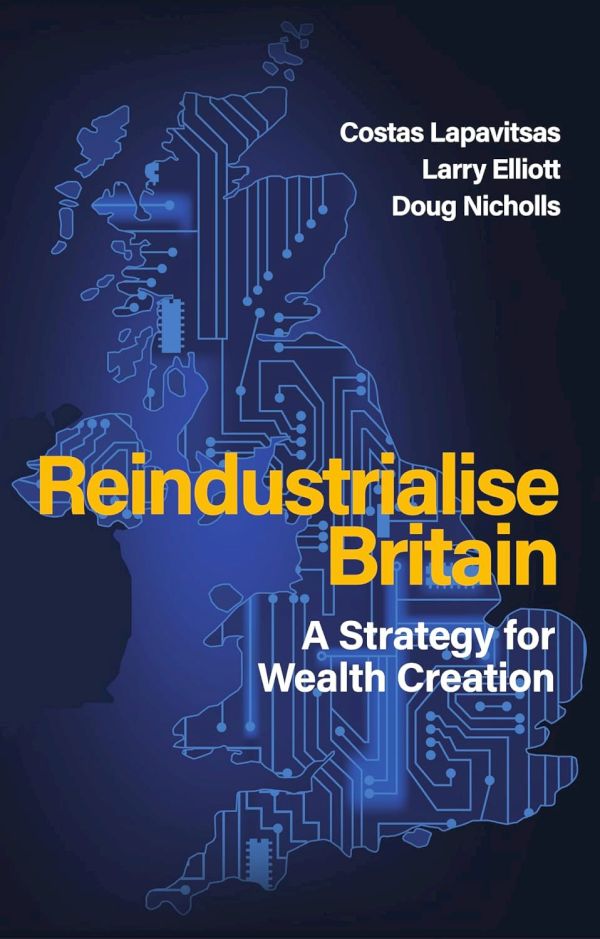
Reindustrialise Britain: A Strategy for Wealth Creation
The nearest thing to an epiphany I had as a student came when I read an early paper (by Dennis Snower, I think) on the “insider-outsider” model of the...