Originally published in 2002 in The Business Economist, volume 33, issue 2. The original publication day is unrecorded.
Grazia Ietto-Gillies, Routledge, 2002, xvii+213 pages, £60.00.
From The Business Economist, volume 33, issue 2 (2002).
Trying to keep one’s head above the flood of books on the transnational corporation (TNC) is an impossible task. The literature analysing the various facets of the beast and its multifarious activities is copious. The so-called phenomenon of globalisation, appears to have given a new lease of life to books and articles on the TNC. Much of it, to the despair of the readers, is no more than old wine in new bottles labelled globalisation. There are, though, rare exceptions. Some of these attempt to analyse the TNC and its operations in the context of the evolving theoretical literature on international trade and investment, they try to steer away from the mere bombast on globalisation and provide a sober view of the operations of TNCs.
Grazia Ietto-Gillies’s book belongs to this select group of books on the TNC. Its objective is to analyse the inter-relationships between the TNCs, which operate across frontiers or national boundaries, and other interest groups such as labour, consumers and national governments. The book is in four parts; the first introductory part reviews the role played by TNCs and information and communication technologies in the globalisation process; the second analyses in some detail the extent and nature of TNC operations; the third attempts a theory of the TNC based on its ability to fragment operations and operate across different regulatory regimes; and the final part discusses the pivotal role of the TNC in the globalisation process.
The book comes into its own in the third part, with the author’s thesis of organisational fragmentation of activities by the TNCs, designed to thwart the objectives of national regulatory regimes encompassing labour, taxation and other macro economic policies. Ietto-Gillies identifies two types of fragmentation of TNC activities – externalisation through outsourcing and subcontracting without surrendering control over production, and the spread of production facilities in regions, areas and countries which are not linked by common labour organisation regimes. Both sorts of fragmentation are designed to counter the power of labour unions and transfer responsibility for labour negotiations and management to external agencies. Although this is not a novel thesis - it was proposed by Sugden whose work is cited in the book – it is an interesting explanation for the observed spread of TNC activities across nations. But it is a thesis hard to sustain with supporting evidence. Indeed, the author acknowledges that the evidence in favour of the hypothesis she propounds is only suggestive and indirect. More often than not labour and labour organisations in host countries welcome foreign investment both because of the relatively high wage rates foreign firms pay and the employment opportunities they create. That foreign firms pay relatively high wages and create a labour aristocracy in host countries, especially the developing countries, was a frequently-heard refrain from the critics of TNCs in the recent past.
There are several other explanations for the geographical spread of TNCs, which the author discusses and are familiar to students of international business, which seem much more plausible than the strategic motive propounded by the author. These include investments designed to capture differing location advantages including availability of trained labour, natural resources and market intelligence. The associated hypothesis that TNCs spread their production geographically to avoid or smoothe the impact of differing regulatory regimes is plausible and there is evidence in support of the proposition in the literature. It is by now received wisdom that the absence of a uniform regulatory regime covering taxation, policies towards mergers and acquisitions and spheres of TNC operations quite often deprive host countries, mainly developing ones, of much-needed foreign investment, and in many cases serve to transfer incomes to the TNCs from the host countries. Here the author’s plea for appropriate policies on the part of national governments and international institutions is timely.
Admittedly no book on TNCs is likely to meet with universal approval. Because of the nature of operations of the transnationals, which the author painstakingly records and analyses in the first part of the book, the subject is bound to be highly controversial. The battle lines are clearly drawn between those who see the TNCs and globalisation as the route to riches and prosperity for one and all, and the opponents who pin each and every problem on the international economy including labour standards and the environment on the TNCs. It is to the credit of the author that she avoids confrontation and debate for their own sake and grounds the discussion in received theories of trade and investment and known facts. I found Chapter 8 on international production in the context of the ‘new’ trade theories illuminating and instructive. This chapter provides an excellent and readable discussion of the new theories and their implications for international investment and is to be recommended to students of trade and investment.
V N BalasubramanyamLancaster University
Archived source: 2002-08-30 website capture.
More Book Reviews
All Reviews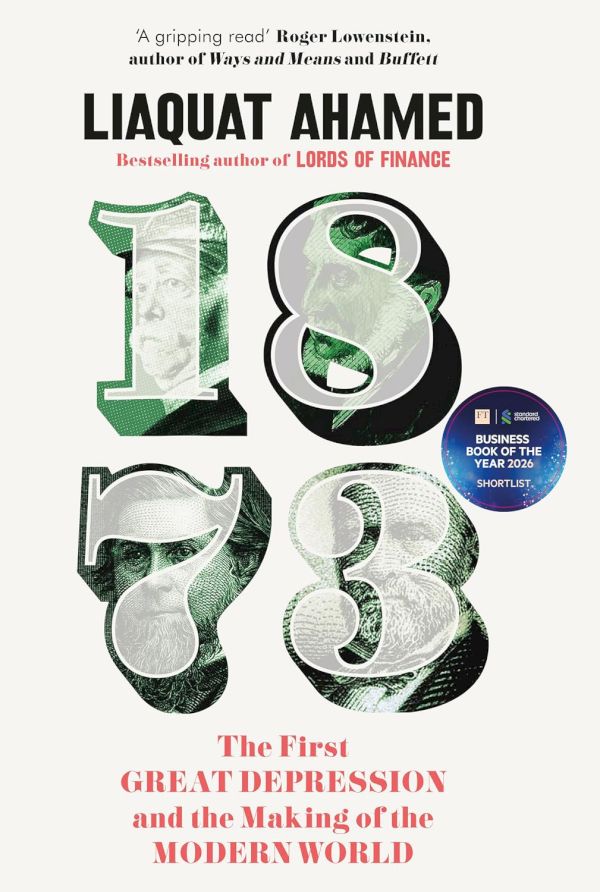
1873: The First Great Depression and the Making of the Modern World
This book is the second to be written by Liaquat Ahamed. He made his publishing debut back in 2009 with “Lords of Finance: The Bankers Who Broke the World”...

Broken China: How the Economic Miracle Shattered and What it Means for the World
China’s rise over the last several decades has been accompanied by an explosion in books seeking to explain its economy and way of doing business to...
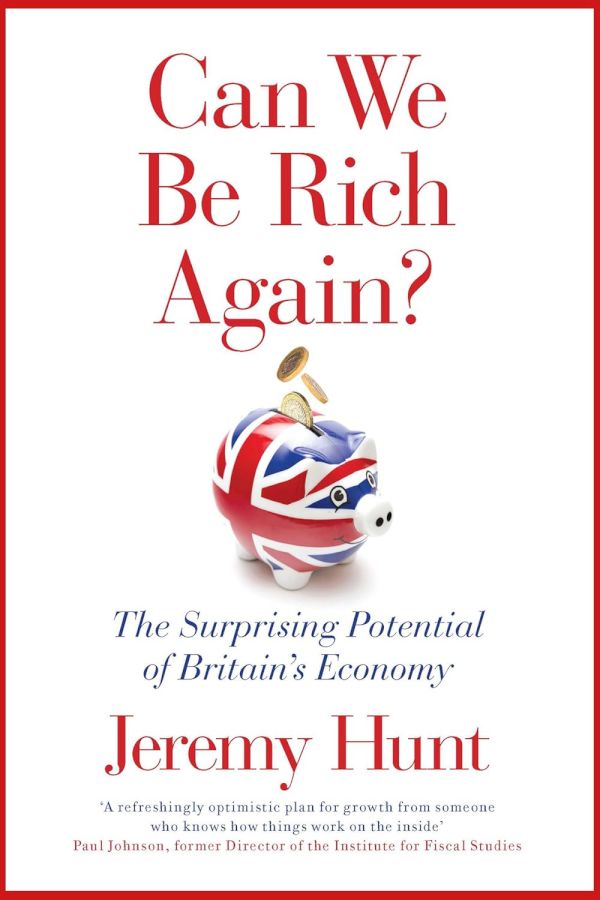
Can we be rich again? The surprising potential of Britain’s economy
Jeremy Hunt has been culture secretary, heath minister, foreign secretary and most recently Chancellor in Rishi Sunak’s government. His stint at HM Treasury...