Originally published in 2001 in The Business Economist, volume 32, issue 2. The original publication day is unrecorded.
Stephen L Parente and Edward C Prescott, MIT Press, 2000, (Third Walras-Pareto lecture, University of Lausanne), xvii + 164 pages, £16.95.
From The Business Economist, volume 32, issue 2 (2001).
This is an interesting book that is also enjoyable to read. The authors try to explain economic development. Why is it, for example, that the standard of living in China in 1950 was about the same as it was in 1800? While people in western countries got richer and richer? Bob Solow’s comment on the book is, “Why are some countries so much richer than others? Parente and Prescott use modern growth theory lucidly and convincingly to show that differences in total factor productivity must be the main reason. They ascribe those differences to monopoly-like denials of access to best technology. That is a tougher sell, but anyone would profit from thinking it out in their company.”
The short answer Parente and Prescott find is that the differences occur because of differences in the effective use of available knowledge.
The authors set out to explain why some countries are so poor relative to the United States and Switzerland. The very large differences in per capita income observed in the past two centuries are new. “Through all but the most recent recorded history, a more or less common living standard characterized all major civilisations” (p 11). By common living standard they mean that a typical individual’s living standard within a society differed by less than two. Since about 1800, what the authors call modern economic growth began in the west and large cross-country differences in per capita income appeared. In the second half of the twentieth century international income differences stopped growing and since 1970 have diminished significantly.
Neoclassical growth theory is used to explain international income differences, assuming constant returns to scale. Using this theory, differences in saving rates result in differences in relative income levels. Following Solow (1957) , the definition of capital has been extended to include human capital. The authors find that if total factor productivity (TFP) is the same across countries, differences in savings fail to explain the differences in per capita income across countries. They then explore a model with an education sector as well as goods and service production. Once more they find the model does not explain the large differences in per capita income.
They then permit TFP to differ across countries. The neoclassical growth model augmented with intangible capital is used to explain international income differences and the Japanese growth experience reasonably well. To turn the growth model into a theory of economic development requires development of a theory of how policy differences lead to TFP differences. Using case studies (textiles and US subsurface coal mining) the barriers that constrain the choice of individual plants are used to explain TFP differences. They conclude that the most important constraints are on work practices and the use of more productive technologies. The constraints are most successful in stopping development if they are backed up by government protection of the monopoly rights of sole suppliers of important inputs.
To test these conclusions they construct a general equilibrium model with an agricultural or traditional sector. There are game theory elements in the model because of interaction between groups of factor suppliers with monopoly rights and new entrants with more efficient production methods. They find this model generates differences in TFP large enough to account for the huge differences in income across countries. The authors conclude that to increase the living standards in less developed countries requires free trade and competition to reduce the barriers to adoption and the efficient use of knowledge in production.
Linda Hesselman University College, London
Archived source: 2002-07-17 website capture.
More Book Reviews
All Reviews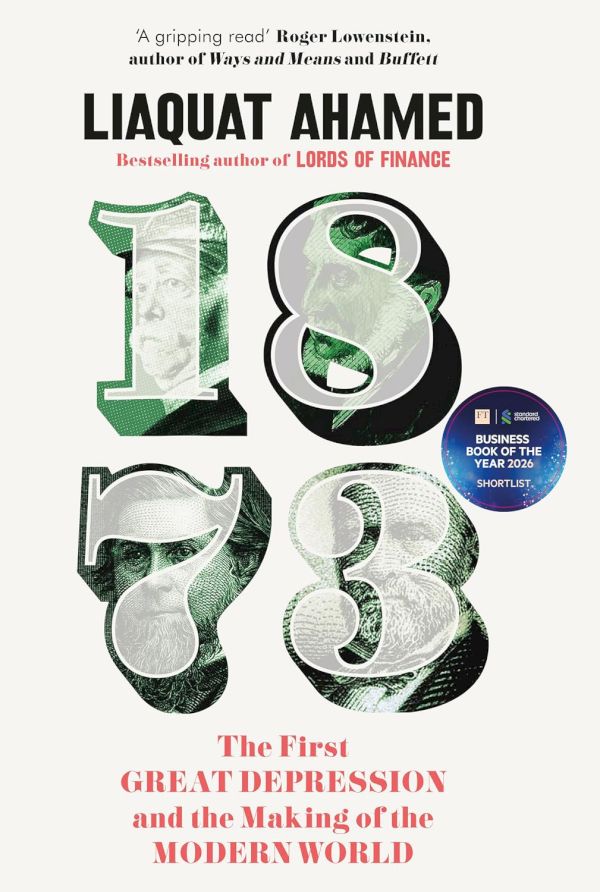
1873: The First Great Depression and the Making of the Modern World
This book is the second to be written by Liaquat Ahamed. He made his publishing debut back in 2009 with “Lords of Finance: The Bankers Who Broke the World”...

How to Invest: Navigating the Brave New World of Personal Investment
This book provides a lively summary of the latest research into how to invest in an uncertain world, infused with the extensive hands-on experience of the...
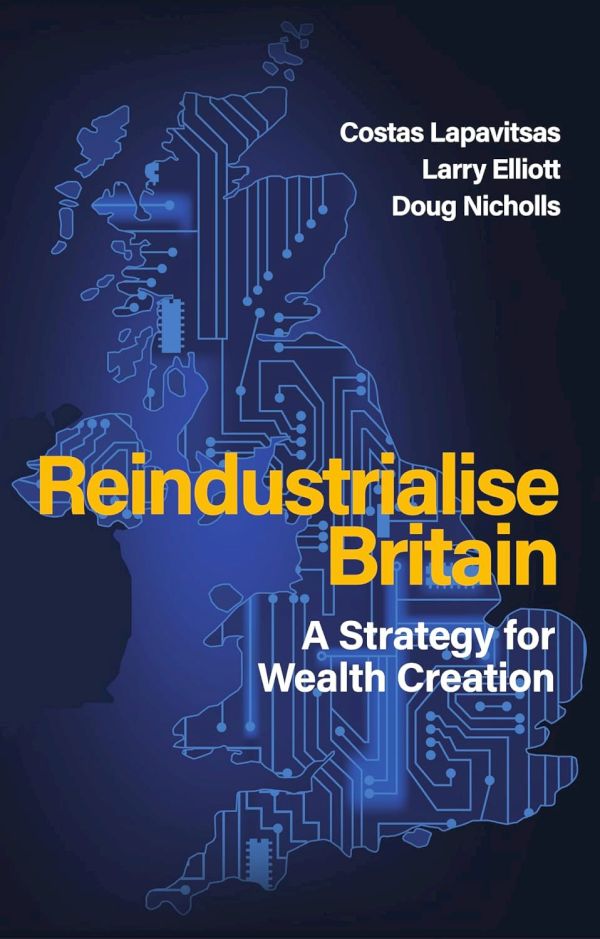
Reindustrialise Britain: A Strategy for Wealth Creation
The nearest thing to an epiphany I had as a student came when I read an early paper (by Dennis Snower, I think) on the “insider-outsider” model of the...