Originally published in 2002 in The Business Economist, volume 33, issue 3. The original publication day is unrecorded.
Stefan Collignon, Routledge, 2002, 230 pages, £55.00.
From The Business Economist, volume 33, issue 3 (2002).
Professor Collignon is one of the few campaigners in favour of the euro who has the competence as an academic economist to deploy a novel set of tools designed to explain the workings of EMU. Like an increasing number of economists, he is convinced of the case for EMU in theory, even if not enough data are yet available to prove the theory conclusively.
The bedrock of the argument is that price stability should have the highest priority, even if it requires – as it has done – short-run sacrifices in output, as much for the sake of micro-economic resource allocation as for that of long-run economic growth. Countries that want to maximise output in the short-run rather than minimise inflation might be better off not sacrificing the devaluation weapon to join EMU.
Collignon shows that nothing else has worked by recalling the history of the last quarter-century, from the breakdown of Bretton Woods through the EMS era of ‘bloc floating’ to full EMU. He points out that the effect of a bloc of currencies fixed to an anchor is far less than that of a currency merger, a point missed by earlier analysis. He admits that greater monetary stability within a currency union may be offset by greater instability against outside currencies – hence the importance of size and openness as variables in assessing the advantages of the euro.
The effects of a single currency in increasing trade by reducing its costs are set out, as is the boost to investment in the traded goods sector due to lower real interest rates. Optimum Currency Areas are seen in a new light as those in which it is more advantageous to merge currencies than to keep them separate, while relying on the integration process to bring about the standard conditions, such as labour mobility and symmetry of shocks.
Collignon dwells at length in a final chapter on the charge that the Euro area is associated with high unemployment, and finally puts in a ‘not guilty’ plea by means of some convincing explanations. Unemployment in some Continental economies appears to be due to a combination of rising productivity reducing the demand for unskilled labour, and tax systems favouring the use of capital rather than labour. The opposite is true in the UK, as the author might have pointed out. It is quite compatible with EMU for each country to choose its own position on the employment-efficiency trade-off.
Collignon is to be commended for thinking the unthinkable in his discussion of the circumstances in which members of EMU might decide to leave. He points to the possibility of ‘voice’ rather than ‘exit’. If a country does not like the deal it is getting, it can ask for it to be changed. We see this happening before our eyes in the case of Germany complaining about the Growth and Stability Pact which it was once the first to insist upon. It is actually a plus for EMU that members are independent States, because consent rather than compulsion is required to make it work. An institution set up to avoid the European civil wars of the past has also been designed to forestall them in the future.
Christopher Johnson
Archived source: 2003-01-07 website capture.
More Book Reviews
All Reviews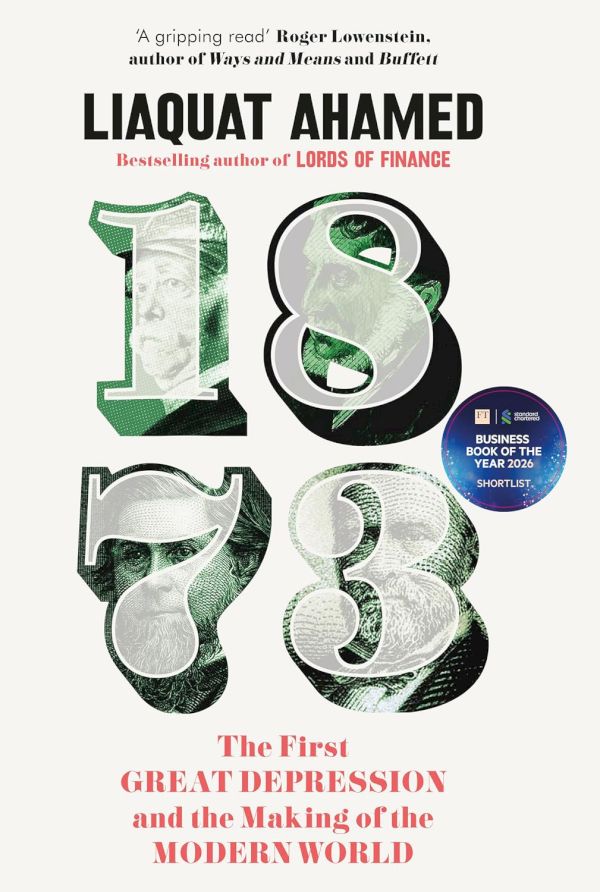
1873: The First Great Depression and the Making of the Modern World
This book is the second to be written by Liaquat Ahamed. He made his publishing debut back in 2009 with “Lords of Finance: The Bankers Who Broke the World”...

Broken China: How the Economic Miracle Shattered and What it Means for the World
China’s rise over the last several decades has been accompanied by an explosion in books seeking to explain its economy and way of doing business to...
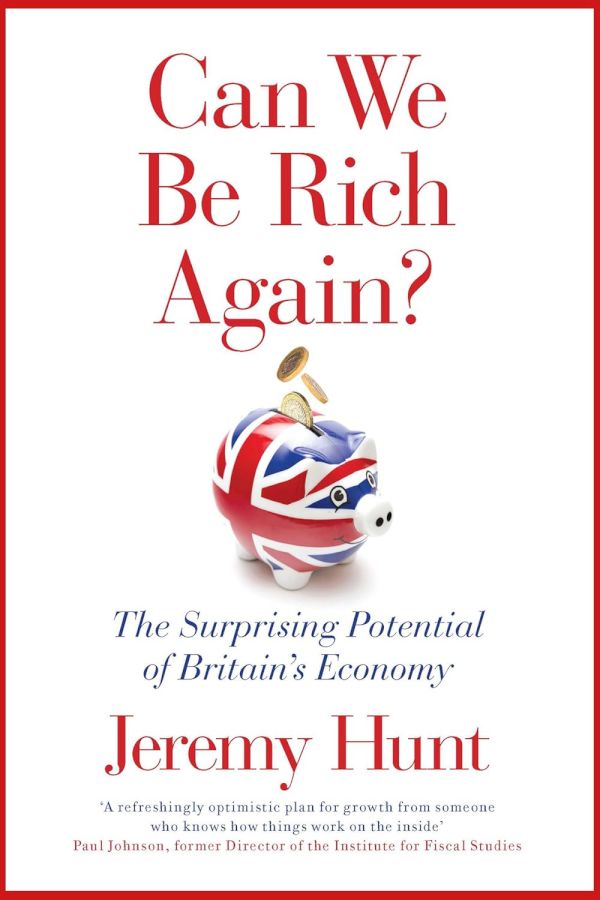
Can we be rich again? The surprising potential of Britain’s economy
Jeremy Hunt has been culture secretary, heath minister, foreign secretary and most recently Chancellor in Rishi Sunak’s government. His stint at HM Treasury...