Originally published in 2004 in The Business Economist, volume 35, issue 2. The original publication day is unrecorded.
Abby Ghobadian, Nicholas O’Regan, David Gallear and Howard Viney, eds, Palgrave Macmillan, 2003, 316 pages, £50.00.
From The Business Economist, volume 35, issue 2 (2004).
This book is a collection of academic papers. The first draws attention to two strategic schools of thought – those analysing market structure and performance (an external perspective), and those focusing on a company’s resource base (an internal perspective). Unsurprisingly, it concludes that successful strategy should cover both. Surprisingly, it does not mention The Strategy Concept and Process by Hax and Majluf which integrates both external and internal perspectives.
Part I reviews the literature on alliances but offers no new insights. There is an interesting chapter on the relationship between multinational enterprises (MNEs) and NGOs. MNEs must distinguish between ‘technical’ NGOs, with whom they can co-operate, and the anti-global ‘mobilisers’ who need to be confronted.
Part II looks at resources. A chapter on the merits of developing resources within the company or acquiring them concludes it makes little difference. What matters is that the cost should be less than the value of resources accessed. A chapter on competence addresses some of the problems with the concept. Another chapter reassuringly finds evidence that some aspects of strategy have a positive effect on some aspects of performance.
Part III is about organisational change. The downsizing and delayering of the 1990s is reviewed. The mantra of team working is questioned, one author deriding “the 1990s ways of organising work (such as teams) … as ‘gimmicks and fads’”.
Parts IV and V look at technological change and innovation and confirm the current thinking that competitive advantage is rooted in the internal resources of a company – the resource-based view.
The last chapter, which should be read first, is a history of strategic thinking over the past forty years. It starts with Edith Penrose’s path-breaking book The Theory of the Growth of the Firm. Overlooked at the time, this came to have a central place in the resource-based view of strategy. Strategy thinking was moved on by Porter’s ‘five forces’ model, rooted in the earlier structure-conduct-performance paradigm. Later Mintzberg identified the importance of uncertainty and feedback. Hamel and Prahalad, with their concept of core competence, bring back the importance of resources held inside the company. The 1990s saw the rise of the learning organisation and knowledge management, which is where we are now.
This book is a good academic review of some of the literature but the title is also rather misleading for two reasons. The link between strategy and performance is not at the heart of the book and there is only one chapter explicitly dealing with the global market place. Neither is it a book for practitioners. They are likely be frustrated by the very academic nature of much of the language (“the rhetoric does not mesh with the praxis”, p 172), the obvious nature of some of the conclusions (“employees were organizations’ most valuable assets”, p 199) and the lack of applicability of the findings.
Donald Hepburn Unilever
Archived source: 2004-12-15 website capture.
More Book Reviews
All Reviews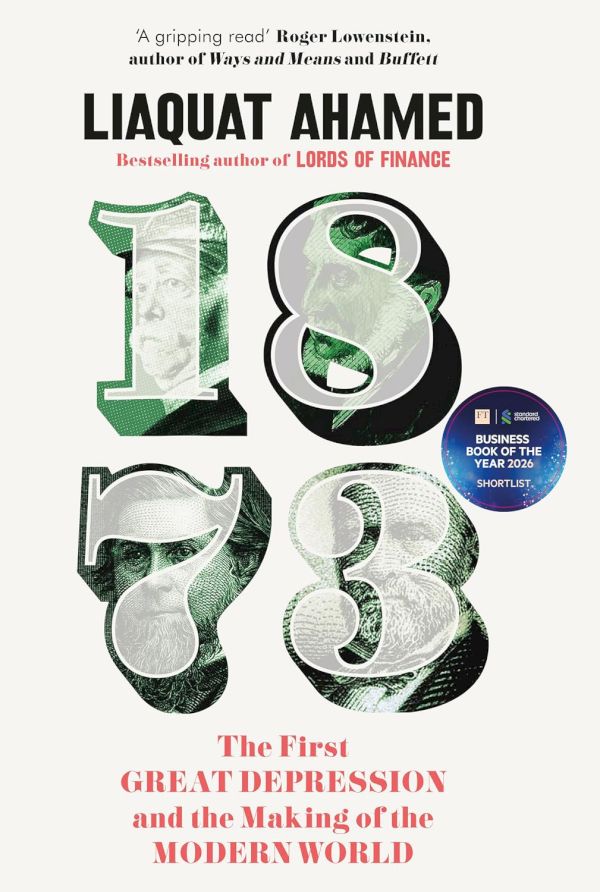
1873: The First Great Depression and the Making of the Modern World
This book is the second to be written by Liaquat Ahamed. He made his publishing debut back in 2009 with “Lords of Finance: The Bankers Who Broke the World”...

Can we be rich again? The surprising potential of Britain’s economy
Jeremy Hunt has been culture secretary, heath minister, foreign secretary and most recently Chancellor in Rishi Sunak’s government. His stint at HM Treasury...
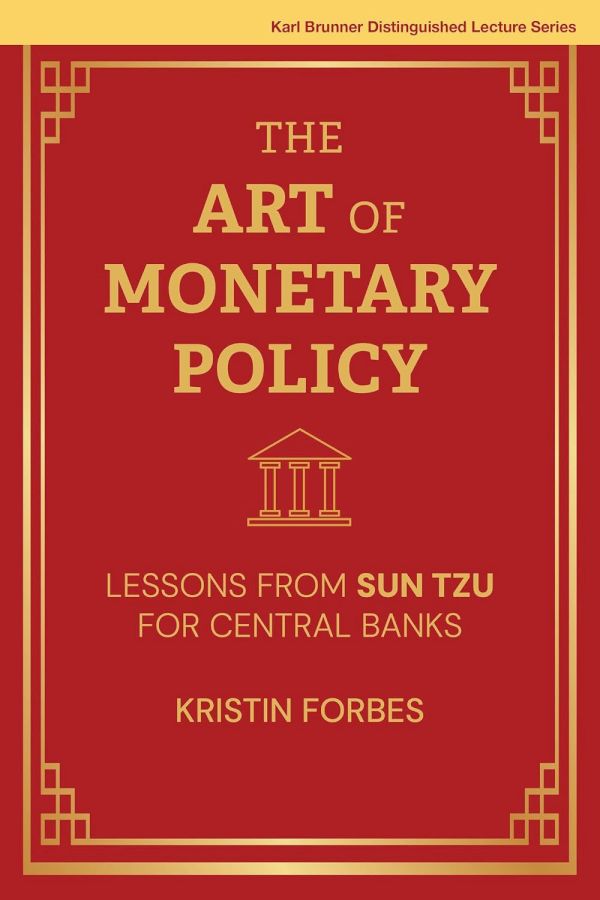
The Art of Monetary Policy: Lessons from Sun Tzu for Central Banks
This (very short) book extends a lecture given by Forbes, in which she draws on the work of the Chinese philosopher Sun Tzu from the fifth century BC. Sun...