Originally published in 2002 in The Business Economist, volume 33, issue 2. The original publication day is unrecorded.
Gill Ringland, Wiley 2002, xii + 276 pages, £16.99. Scenarios in Public Policy Gill Ringland, Wiley, 2002, xii + 265 pages, £16.99.
From The Business Economist, volume 33, issue 2 (2002).
All good books raise questions, not all books which raise questions are good books. I am sorry to report that Gill Ringland’s pair of volumes on scenario planning raised all the wrong questions for me.
‘How could anybody have decided to publish these books?’ was one. ‘What on earth is she talking about?’ was another.
My conclusion was that neither Ringland nor her publishers had any great interest in producing good books: both of them wanted another couple of titles out with minimum effort. Not only is this pair poorly structured overall, but each chapter and indeed most paragraphs show signs of having been thrown together in haste. Indeed, the overwhelming impression is that these books are little more than transcriptions of Gill Ringland’s ring binders on scenario planning.
One consolation is that Ringland clearly has a wide range of experience, and an even wider range of contacts who supply her with some of her chapters. Some of these contributions are excellent. Barbara Heinzen’s ‘Pitfalls and Pratfalls’ in Scenarios in Business is as neat a summary as you could want about mistakes people make in thinking about the future.
Other chapters are intriguing but not much more. Scenarios in Public Policy contains ‘Scenario Planning Goes to Rome’, an account of a scenario project carried out for the Roman Catholic De La Salle Christian Brothers – but unfortunately it’s light on the details of what went on and why.
This is a common fault in the book, which is packed full of remarkably uninformative case studies. The first one in Scenarios in Business tells us that “the scenario-planning group met about once a week over 10 weeks” but doesn’t explain for how long, who was in the group, how big the group was. In short, it’s sketchy on a number of things which you would want to know if you were trying to follow in Ringland’s footsteps. ‘Making Scenarios Work’, a 65-page section reprinted in each book, goes some way to rectifying these faults – but it is still a hotchpotch of bullet points. If you were trying to teach yourself to run a scenario process you could probably just about manage it using this section, but it would be a joyless struggle.
Many of the faults in these books have a common source, which is that Ringland devotes little space and no imagination to describing what scenarios actually are. The unsuspecting reader finds himself trying to work out what an elephant is from the accounts of the seven blind men.
Scenario planning should not be a difficult process to outline. In its simplest form, you get together a collection of relevant people (experts and stakeholders) and you invite them to discuss stories of the future rather than history or their current demands. By keeping the conversation in the future, you maintain a safe and highly creative environment for discussion. Sometimes the effect is to create insight by thinking about the implications of current trends, or the interaction between different forces. At other times, it is simply to help people say what is on their minds without fear of embarrassment or censure – I’ve seen this work extremely well, whether getting academics to speculate about HIV/AIDS or schizophrenics to tell psychiatrists how they feel about their treatment.
Scenarios have a dual advantage: not only do they create ideas but they provide a compelling way of communicating them. (There are no good examples in the Ringland books, unfortunately.) Good scenario stories are plausible but imaginative, challenging and memorable. This means that people in an organisation remember them, understand them, extrapolate from them, and use the stories to communicate with each other as the rest of us might use references to Shakespeare or Aesop’s fables.
This book is about as far from Shakespeare as I can imagine. Admittedly, scenario planning is a creative process and so it’s easier to learn by doing than to learn from a book. That simply means that a manual about scenarios requires more effort and imagination than were lavished on these hugely disappointing volumes.
Tim Harford Shell International
Archived source: 2002-08-30 website capture.
More Book Reviews
All Reviews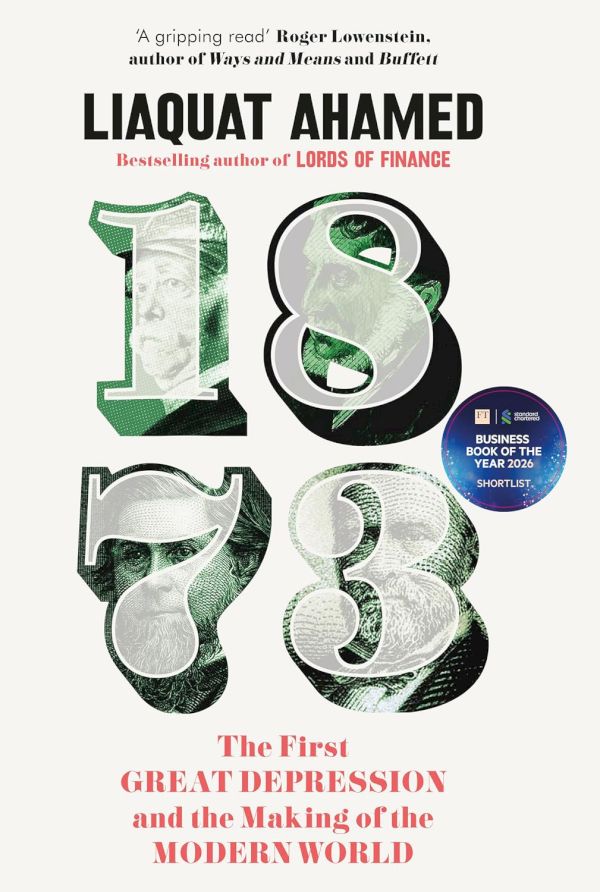
1873: The First Great Depression and the Making of the Modern World
This book is the second to be written by Liaquat Ahamed. He made his publishing debut back in 2009 with “Lords of Finance: The Bankers Who Broke the World”...

Broken China: How the Economic Miracle Shattered and What it Means for the World
China’s rise over the last several decades has been accompanied by an explosion in books seeking to explain its economy and way of doing business to...
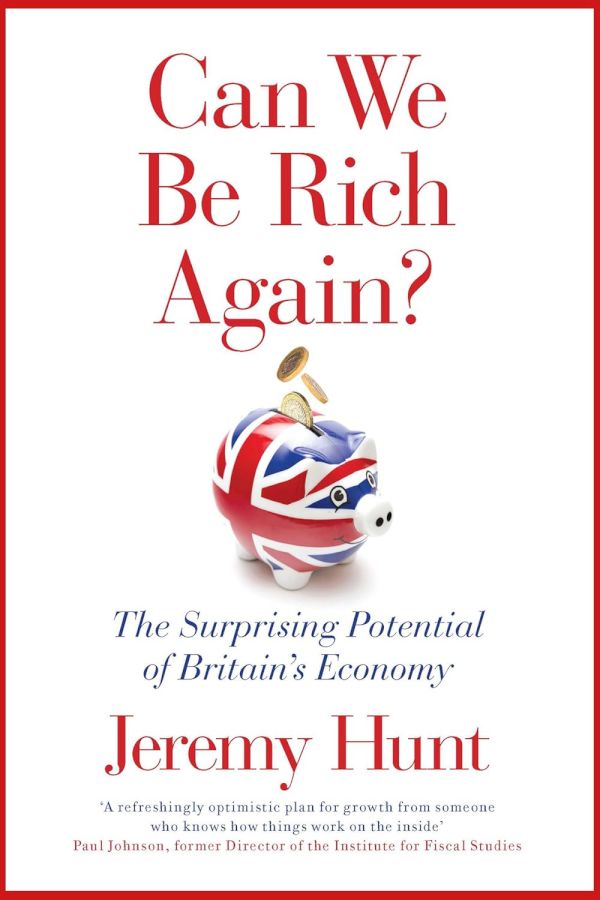
Can we be rich again? The surprising potential of Britain’s economy
Jeremy Hunt has been culture secretary, heath minister, foreign secretary and most recently Chancellor in Rishi Sunak’s government. His stint at HM Treasury...