Originally published in 2002 in The Business Economist, volume 33, issue 3. The original publication day is unrecorded.
Ha-Joon Chang, Anthem Press, 2002,187 pages, £14.95.
From The Business Economist, volume 33, issue 3 (2002).
Donor countries and international financial institutions, together making up the core of what Chang calls the International Development Policy Establishment (IDPE), have often appeared to be in a state of some confusion in recent years. They have seemed befuddled by financial crises in Asia and Latin America. They have not come out well from the experience of foisting rapid institutional and policy change on the formerly Communist states of Eastern Europe. And there has been internal conflict, for example within the World Bank, over the appropriateness of ‘Washington Consensus’ policy recommendations focusing chiefly on market liberalisation, privatisation, and an overriding commitment to beating inflation down to minimal rates. Out of the confusion and the lack of clear success in structural adjustment programmes has come a new rhetoric that emphasises, for example, the importance of ‘ownership’ of development strategies. However, what it is that developing countries are meant to own remains, at heart, a common set of ‘good policies’. These good policies are broadly those of laissez-faire economic policy plus policies to introduce or upgrade institutions that are assumed to reflect ‘good governance’: democracy, a professional bureaucracy, independent central banking, and clear property rights.
If the argument in Chang’s book is correct, there will be plenty more confusion to come in the IDPE. For what are generally regarded as good policies by the now developed countries (NDCs) are, he argues, rather unlikely to produce the expected return of sustained high rates of economic growth and structural change. The main argument of this concise, punchy book is that the now developed countries did not get where they are today by means of such ‘good policies’. Rather, they all applied a range of industrial, trade and technology (ITT) policies that violate the principles of free trade and neo-classical economics. This goes for the USA from the eighteenth through to the twentieth centuries; and it goes for Britain, which despite having come closer than any other country ever to a genuine free trade position nonetheless built its industrial success on infant industry promotion and protectionism from early on. It goes too for a range of other countries that Chang looks at, from France to Sweden and Switzerland and to Japan and South Korea more recently, though he nicely emphasises the variety of ITT policies beyond simple tariffs. At the same time, the book argues that the institutions of governance so glibly associated these days with economic development were typically the product of economic growth rather than its primary cause, though it is the case that once developed these institutions have often played a supportive role in further economic expansion.
Overall, the book is a joy: a fantastically useful teaching aid and a very necessary historical conscience in an age of amnesia. It is also written without the sensationalism of many recent critical books of international political economy: because of that it might not have such a broad audience but it certainly deserves an intelligent reading by policy makers, business strategists, and development agencies. Such an ambitious book is bound to be frustrating in various ways. For example, many would agree that institutional development tends to be slow, and that ITT promotion policies are necessary in developing countries if they are really to be transformed. But that begs the enormous question of where such policies and institutions come from, and under what circumstances ITT policies do work effectively when it is known that they are not always associated with successful outcomes. The answers probably have rather more to do with political conflict of various kinds (including war, which is rather brushed aside in this book), with contingency, and with nationalism than Kicking Away the Ladder allows. It would also be interesting to probe further the implications of IDPE power over developing countries, for it sometimes seems that many countries are undergoing a kind of historically (from the NDC perspective) back-to-front development. Societies are encouraged to develop representative legitimacy but without having in place effective taxation systems, contrary to the sequencing in early industrialising nations. And where many modern states legitimised and eventually domesticated gangsterism and warlordism, recently some countries seem to get a state first and robber barons and warlords or violent bosses second. What we need to consider is the implications of these phenomena for the development of classes that promote and sustain the advance of capitalism, and for sets of interests that might push from within low and middle income countries for the changes that are necessary, for example, to WTO rules. Nonetheless, in spite of these quibbles, Chang’s excellent book should work as an important agent in clarifying development debates.
Chris Cramer School of Oriental and African Studies
Archived source: 2003-01-07 website capture.
More Book Reviews
All Reviews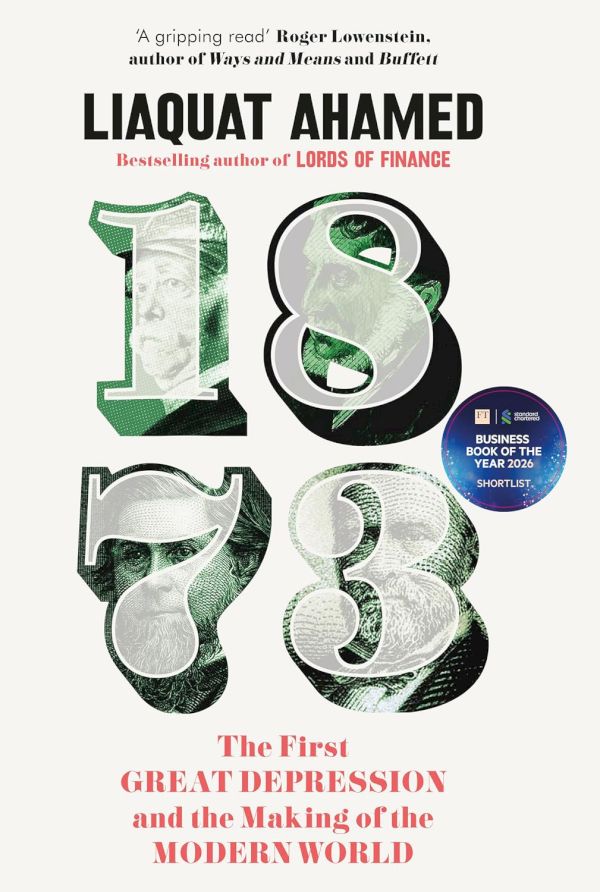
1873: The First Great Depression and the Making of the Modern World
This book is the second to be written by Liaquat Ahamed. He made his publishing debut back in 2009 with “Lords of Finance: The Bankers Who Broke the World”...
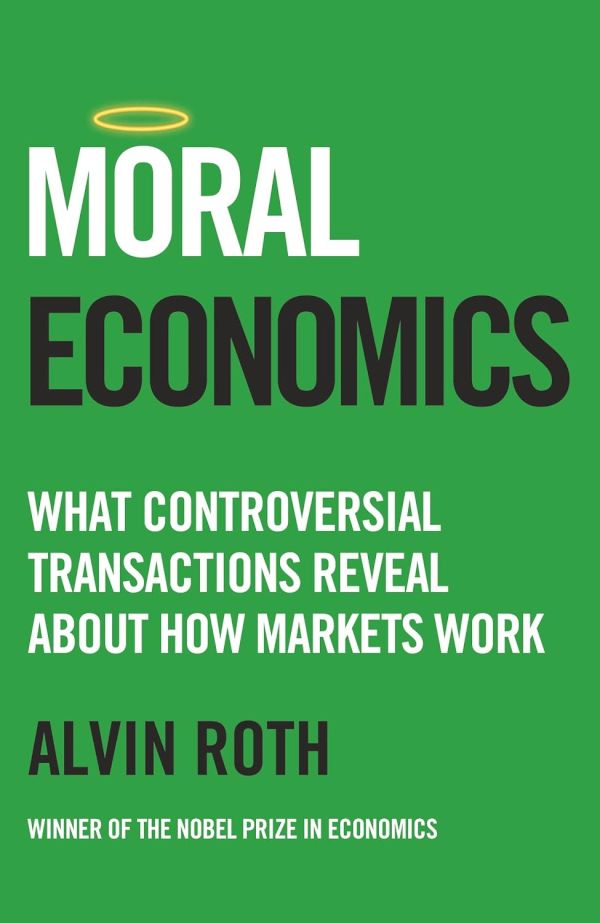
Moral Economics: What Controversial Transactions Reveal About How Markets Work
Moral Economics is an unusual book in the sense that it is a book about the things that we, collectively as a society, have decided at some point in time we do...

To Think Like a Statistician
Statistics professor Susan Holmes said that statistics is like Poland, perpetually surrounded by powerful neighbours — probability, mathematics, applied...