Originally published in 2002 in The Business Economist, volume 33, issue 1. The original publication day is unrecorded.
Michael Pettis, Oxford University Press USA, 2001, xix + 245 pages, £36.99.
From The Business Economist, volume 33, issue 1 (2002).
Emerging market crises are primarily the result of cycles in credit and liquidity in the major global economies rather than domestic problems. Global liquidity cycles will continue, but the key to avoiding crises in the future is for emerging market policy makers to engage in much more active management of risks in sovereign and national financial balance sheets. Risk management is much more important for crisis avoidance than traditional macroeconomic performance and structural reform policies. These are, in stylised terms, the central conclusions of The Volatility Machine, a cogent and compelling essay on the dynamics of emerging market crises.
In the first half of the book, Pettis sets out probably the clearest exposition to date of the view that the origins of emerging market crises lie not with structural and macroeconomic problems in the local economy but in shifting financial conditions in the world’s richest countries. In an impressive historical account of developing country sovereign crises since the early 1800s, Pettis highlights the fact that, time and again, crises have been preceded by a period of rapidly expanding global liquidity, followed by a sharp tightening in financial conditions in the US, Western Europe or Japan. According to this view, the ebb and flow of money and liquidity in the major global financial centres is the prime driver of capital flows to emerging markets, rather than investor perceptions of domestic growth prospects and local rates of return.
The author describes a recurring historical pattern whereby an expansionary monetary shock in the major economies leads to an increase in demand for risky assets by rich country investors. At first this is met at home, but sooner or later the increased thirst for yield raises investor demand for developing country assets, causing emerging market capital inflows to surge. This sets off a self-reinforcing cycle as domestic growth increases, confidence improves and structural economic change becomes easier as new sources of capital circumvent domestic vested interests. Through this stage of the liquidity boom there is increased talk of the benefits of globalisation and of paradigm shifts in developing country policy regimes. But inevitably the rich country credit cycle turns and investors become concerned about excessive exposure to risk, policy is tightened, world commodity prices fall and liquidity contracts. Capital inflows to emerging markets dry up, growth slows and political support for market opening and reform dwindles. The debts accumulated in the boom period become unsustainable and sovereign default follows.
Pettis documents a series of international lending booms ending in emerging market crises. These include the 1820s, when rapid monetary expansion in the UK in the first half of the decade – fuelled by growth of currency issuance following the 1822 Bank Act – saw a surge in lending to Latin America and other peripheral markets. When UK interest rates were increased and risk appetite among UK bankers collapsed, widespread Latin American sovereign defaults followed. Pettis annotates at least six other comparable episodes over the following 180 years, including the ‘petrodollar’ frenzy of the 1970s when financial surpluses in the OPEC region were channelled into emerging markets. This too was ended by a sharp contraction in global liquidity when US interest rates were raised in the early 1980s, tipping Mexico into default in 1982 and the rest of Latin America soon afterwards.
With these fluctuations in global liquidity set to continue, emerging market countries need to recognise that they will face ongoing cycles in capital inflows and their policy makers should focus on ways of minimising the economic and financial disruption that these can cause. It is here that Pettis offers his most powerful policy conclusion, namely, that emerging market policy makers need to devote far more attention to managing the risks inherent in national balance sheets. Specifically, in a climate of ever volatile capital flows, monetary and fiscal authorities need to adopt more sophisticated liability management strategies that seek to hedge the financial balance sheets of domestic public and private sectors against the risk of capital outflows, rising interest rates and currency weakness.
Pettis draws a sharp contrast between risk management strategies adopted in the US corporate sector with those followed by emerging market sovereigns. Corporate risk managers devote much attention to minimising the volatility of earnings net of debt service and to reducing the vulnerability of asset values to market risk. This is achieved partly through capital structures that imply a positive correlation between financing costs and operating earnings. For example, an airline company whose costs vary directly with the price of oil will hedge against this by seeking finance at a price that varies inversely with oil prices. Similarly, a US exporter to Europe, whose revenues will fall if the euro weakens, will seek to borrow in euros so that its overall position is insulated from currency fluctuations. The author invokes corporate finance theory to show that such a hedging strategy not only reduces volatility but also enhances a company’s market value by reducing the risk of financial distress or bankruptcy.
Pettis argues that emerging market sovereign governments, on the other hand, pay scant attention to these hedging considerations. Worse still, there tends to be a systematic bias towards sovereign financing strategies that exacerbate, rather than offset, the impacts of shocks to a country’s financial health. In particular, sovereigns exhibit a tendency to borrow at floating interest rates, short-maturities and in (or linked to) foreign currencies. Such strategies exhibit a strong upside when a country is going through a boom period characterised by strong capital inflows, declining spreads and an appreciating exchange rate. In these circumstances the positive external liquidity shock will have strong knock-on effects, reducing financing costs, easing refinancing requirements, lowering the domestic value of foreign currency debts and improving the fiscal balance. In turn, this will encourage further capital inflows as fundamentals will appear to have improved, further reducing the deficit and so on. It is easy to understand, so the argument goes, why emerging market policy makers find these dynamics seductive, as they seemingly represent concrete reward from the markets for sound policies.
However, when external liquidity conditions reverse and capital inflows decline, these financial structures conspire to make a bad day worse. Currency depreciation and widening spreads will rapidly increase debt service, while the prevalence of short-maturities sees refinancing difficulties emerging quickly. In other words, typical emerging market sovereign financing structures serve to increase the volatility of debt repayment capacity – precisely the opposite of the US corporate approach. Though less clearly under the sovereign’s control, private sector balance sheet vulnerabilities can also increase volatility and the risk of crisis for emerging markets. For example, unhedged foreign currency borrowing by corporates can result in a surge in demand for foreign currency once the exchange rate starts to decline, as firms seek to procure the foreign exchange they need for debt service in advance of further depreciation.
This thesis suggests that balance sheet fragility was a major factor behind the string of emerging market crises over 1994 to 1999. The Mexican crisis in 1994 was characterised by both excessive floating rate exposure – which served to double up the impact of US monetary policy tightening – and then the Tesobono affair (dollar-linked short-term government bonds). Brazil in 1998 adopted a short-term funding strategy based on the expectation that interest rates would soon decline, leaving the fiscal deficit highly exposed when contagion from Russia saw capital inflows decline and interest rates rise. And South Korea, by most macroeconomic measures still a good performer in 1996 and 1997, suffered near meltdown almost entirely due to private sector external balance sheet vulnerabilities, namely the massive build up of short-term foreign currency obligations which swamped official reserves. Such is the power of these balance sheet mechanisms that they can overwhelm traditional macroeconomic responses to shocks. Thus in Indonesia, the initial exchange rate depreciation that followed the floating of the Thai baht in 1997, far from spurring an export recovery and helping the economy self-correct, instead set off a scramble for foreign currency by unhedged corporate borrowers, in the process sending the rupiah into free fall.
The international investment and policy-making community has of course recognised the key role that balance sheet weaknesses have played in recent crises and these have, for example, become a key consideration in assessments of sovereign creditworthiness since the Asia crisis. But Pettis’s work adds great force to the argument that countries should be prepared to pay the price markets ask – in terms of holding higher reserve levels or locking into long-term debt contracts even if interest rates are expected to fall – in order to insure their economies and financial systems against volatility in global capital markets. It also strengthens the case for greater development of local currency long-term fixed income debt markets, an area where a number of countries have made little progress despite increases in overall domestic public debt levels.
Inevitably, questions can be raised about the analysis. Firstly, the definition of global liquidity itself remains a grey area. And the mechanism by which global monetary shocks feed into demand for emerging market assets is still rather unclear. If Pettis is right, a key priority for emerging market policy makers would be to track and predict global liquidity movements more accurately. Secondly there may be limits as to how easily the risk management strategies of a corporate borrower can be transposed to the sovereign level. By their nature sovereign balance sheets tend to be larger which may make it harder to find counterparties to hedging strategies. Ultimately risk reduction by a sovereign borrower must entail investors taking on more risk – in other words becoming more like equity investors, sharing more of both the upside and downside risk. Some emerging market debt managers would probably dispute investors’ willingness to do this. But Pettis argues that, to the extent that hedging strategies reduce the risks of a sovereign debt crisis – an event which is typically far messier and more costly to the investor than corporate bankruptcy – investors would reward such strategies. Thirdly and most important, it surely is the case that traditional macroeconomic and structural fundamentals are key factors in crises. It is hard to believe that the crisis in Mexico would have been so severe without its weak banking system, that Brazil and Russia would have fared just as badly without their large primary fiscal deficits and that Korea would have approached sovereign bankruptcy without excessive corporate leverage. Moreover recent developments in Argentina and Turkey have shown how structural weaknesses and inconsistent macroeconomic policies can end in crisis even in an environment of buoyant global liquidity.
Nevertheless, Pettis’s book offers invaluable insights into the dynamics of emerging market crises and provides important lessons for emerging market policy makers, investors, rating agencies, international institutions and anyone interested in emerging market finance. Moreover he has succeeded in delivering a punchy and highly readable volume.
Brian Coulton Fitch Ratings Ltd
Archived source: 2002-05-09 website capture.
More Book Reviews
All Reviews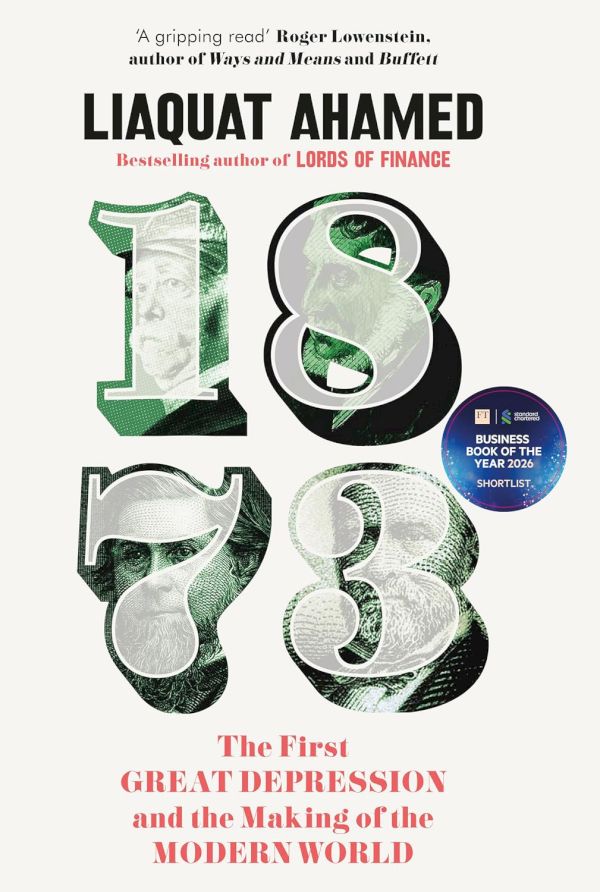
1873: The First Great Depression and the Making of the Modern World
This book is the second to be written by Liaquat Ahamed. He made his publishing debut back in 2009 with “Lords of Finance: The Bankers Who Broke the World”...

How To Think About AI: A Guide for the Perplexed
Richard Susskind’s ‘How to Think About AI: A Guide for the Perplexed’ offers a clear and thoughtful introduction to an inherently complex and...

How to Invest: Navigating the Brave New World of Personal Investment
This book provides a lively summary of the latest research into how to invest in an uncertain world, infused with the extensive hands-on experience of the...