Originally published in 2003 in The Business Economist, volume 34, issue 3. The original publication day is unrecorded.
Daniel Cohen, MIT Press, 2002, 126 pages, £16.50.
From The Business Economist, volume 34, issue 3 (2003).
Daniel Cohen’s book is an interesting account of the broad economic and social impact of technological change. He neatly identifies the costs and benefits of technological change. The 20th Century began with the introduction of assembly line production and a belief in the great hope of standardisation. In Cohen’s view, the downside of this development was a dehumanisation of the work place due to the endless repetition of the production process.
More recently, Cohen argues that the information technology revolution has become the latest great hope, owing to its emphasis on initiative and the more decentralised organisation of work that it permits. But, according to him, all is not well because the greater flexibility of the modern work place has also brought with it the psychic stress and burnout of the 24/7 working environment. Cohen attacks negative ‘end of work’ paradigms as false, whilst retaining a deeply pessimistic outlook for other reasons.
The author’s central argument is that capitalism will be in crisis until the importance of human capital is no longer overshadowed by the cost saving efficiencies demanded by financial capital. He states that: “To the question ‘Can capitalism survive? Schumpeter answered NO, adding that this was not because capitalism would be devoured by internal contradictions, but because its very success would render it detestable”.
Why do our times seem harsher than preceding ones? Cohen provides two explanations. First, the modern era is incomplete because it lacks specific social regulation. The past century has seen a huge shift from totalitarianism to neo-liberalism, but Cohen believes a new set of social rules is yet to be found. As a result, the power of financial capital eclipses that of human capital, and a sense of angst is the consequence. Whilst understanding Cohen’s argument, I have an unease with loose phrases such as ‘financial capital’ and the lack of specific argument here. Moreover, there is a much more important point as well. Cohen speaks in vague terms of the need for new social regulation, but what does this mean? Onerous and prescriptive regulation on companies to meet corporate social responsibility objectives will get us nowhere. The end result will be continued global pressures for innovation and change but less economic growth as the reward for that effort.
Economic efficiency is not solely concerned with the maximisation of self-interest. Adam Smith clearly understood that an economy will work best when the businessman displays a sense of responsibility to those around him. But this does not mean that we should impose this responsibility on market mechanisms. Sure, the world is not perfect, but today’s workers are wildly affluent when compared with their great grandparents – both in terms of income and working conditions. At times, Cohen’s arguments are almost those of an ungrateful child, who is surrounded with Christmas presents, but still wants more.
Second, Cohen argues that whilst modern men and women have been liberated from subservience by technology, they now realise that work is still endless, owing to the degree of competition, innovation and change which modern society experiences. He states that:
“Contemporary humans are discovering more fundamentally that, even if the technological world progressively liberates them from necessity, it does not liberate them from technology itself”.
This point is fair, but should not be viewed in isolation. Whilst the social psychology may be correct, we should not forget the growth dividend and the fact that real incomes can easily double over the course of a working life. Moreover, to the extent that the pace of change, and economic growth accelerates, the growth dividend will be even greater.
Graeme Leach Institute of Directors
Archived source: 2004-02-23 website capture.
More Book Reviews
All Reviews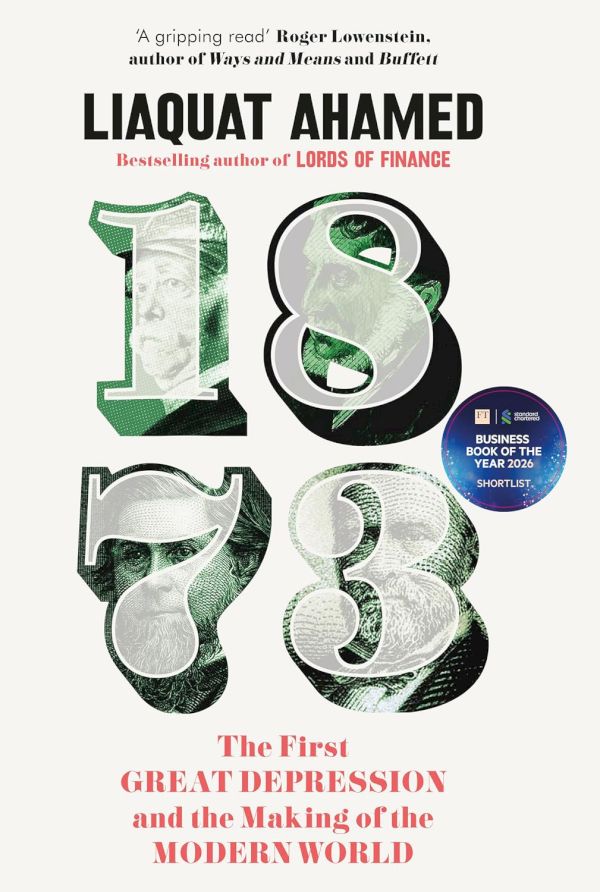
1873: The First Great Depression and the Making of the Modern World
This book is the second to be written by Liaquat Ahamed. He made his publishing debut back in 2009 with “Lords of Finance: The Bankers Who Broke the World”...

Contingent Expectations
Nearly all important economic decisions depend in some degree on expectations, as opposed to established facts. At the beginning of their new book, Alexander...
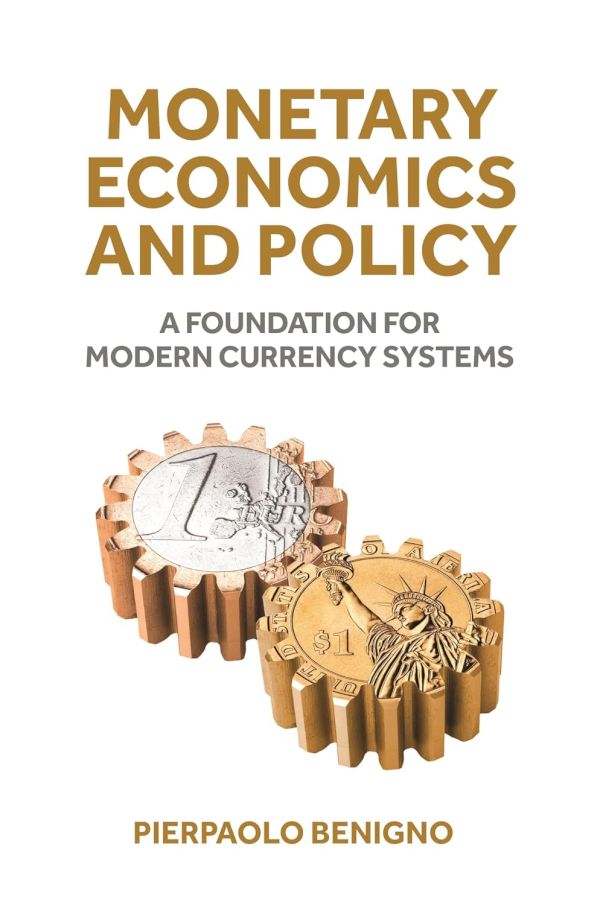
Monetary Economics and Policy: A Foundation for Modern Currency Systems
I enjoyed reading this book. It covers a wide surface area of monetary economics, and I think it will be useful for people studying the subject. It is...