Originally published in 2002 in The Business Economist, volume 33, issue 3. The original publication day is unrecorded.
Peter Dorey, Sussex Academic Press, 2001, 265 pages, £45.00.
From The Business Economist, volume 33, issue 3 (2002).
The extent to which incomes policies dominated the period before the first Thatcher Government was elected in 1979 is evident from the existence of some sort of formal incomes policy in this country in practically every one of the years between 1960 and 1980. Since then, however, nothing. So complete has been the demise of incomes policy as a feature of macro-economic policy that, as Peter Dorey points out in this excellent review of the area, “we are now obliged to conclude that incomes policies have been consigned to the realms of history”.
Why recent Governments have eschewed incomes policies as part of their macro-economic toolkit seems to lie in the victory of two important viewpoints associated with ‘Thatcherite’ neo-liberalism. The first placed the control of inflation, rather than the eradication of unemployment, at the centre of economic policy. The second saw no role for government in trying to control bargaining arrangements between employer and employee. The effect of both was to leave the parties to bargain freely, but with the clear proviso that they bear the consequences of ‘unaffordable’ pay awards. In that climate, there was no place for guidelines, norms, statutory limits, ‘statements of intent’, or any of the other paraphernalia of incomes policies through the ages.
This book documents these changes in philosophy. Equally important is its comprehensive analysis of the many attempts at incomes control that have been introduced by Governments of both persuasions since 1945. It identifies the reasons behind the policies, the characteristics that they contained and the reasons why they all foundered – often bringing down their various sponsoring Governments with them.
This is a book as much about the history of British industrial relations since 1945 as it is about Government attempts to control pay. As such, it will appeal to students of both disciplines, especially to those seeking to understand why and by how much the Britain’s economic landscape changed with the election of a neo-liberal and monetarist Conservative Government in 1979.
The book certainly brought back happy memories for me. My first job in industrial relations at the National Union of Seamen in the mid-1970s involved writing an annual pay claim costed by the employers at a little over 100 per cent, pretty reasonable by the standards of the day. An arbitration award resulted in a package worth 54 per cent. In those days, the British shipping industry had 2,200 vessels and 120,000 employees. It has neither now. I sometimes wonder if the two are connected.
Steve Palmer Office of Manpower Economics
Archived source: 2003-01-07 website capture.
More Book Reviews
All Reviews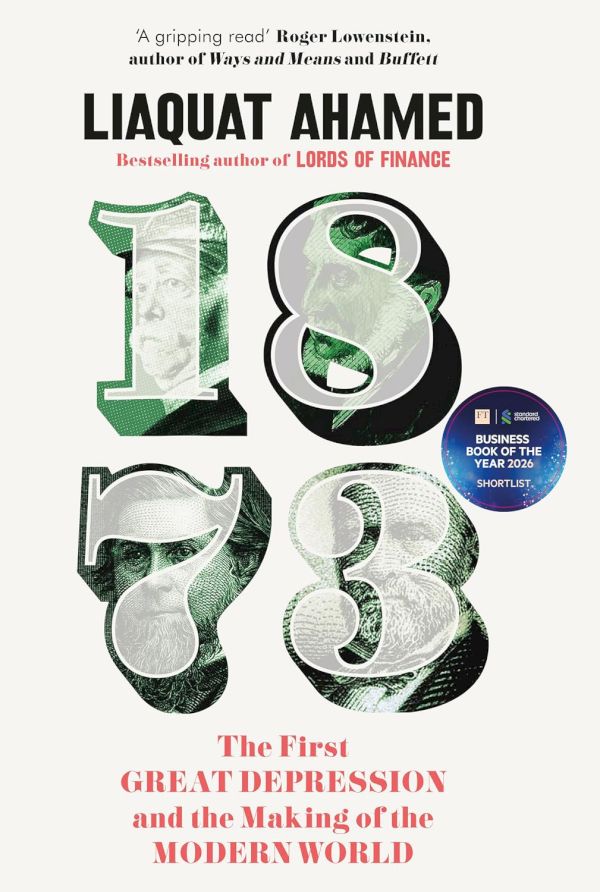
1873: The First Great Depression and the Making of the Modern World
This book is the second to be written by Liaquat Ahamed. He made his publishing debut back in 2009 with “Lords of Finance: The Bankers Who Broke the World”...

To Think Like a Statistician
Statistics professor Susan Holmes said that statistics is like Poland, perpetually surrounded by powerful neighbours — probability, mathematics, applied...

The Common Good Economy: A New Compass
I was looking forward to reading this one. Mariana Mazzucato’s earlier book The Entrepreneurial State sits proudly on my shelf, between my copies of JM...