Reviewer: Kate Morrison (ThinkPlayDo Group, London).
All Volume 39 No2 246 17 July 2008 William P Barnett, Princeton University Press, 2008, 272 pages, £17.95.
This book is a contribution to the field of organisational learning that seeks to explore the link between competition and organisational development in terms of the Red Queen model of co-evolutionary selection. Deriving from the Red Queen’s statement in Lewis Carroll’s
Through the Looking Glass
that
“it takes all the running you can do, to keep in the same place”
, Barnett’s insight is to apply this model to organisational ecology, by treating the ‘organisation’ as if it were an ‘organism’. His central thesis is that organisations learn by engaging in competition: the more they compete, the more they learn.
The metaphor of ecology is centered on the notion that learning not only makes organisations stronger competitors but also triggers learning in rivals. Organisational adaptation, Barnett explains, should be modelled as a function of competitive activity,
“Since through such competition an organization learns about and adjusts to the logic of competition in its environment.”
Competitiveness thus varies as a function of the organisa-tion’s recent experience of competition.
The book proceeds to describe the concept of ‘logics of competition’ and offers a model of the Red Queen in terms of ‘hysteretic’ competition. This means that organisations that have recently experienced competition are ‘more viable and generate stronger competition’. The twist Barnett adds to this is the ‘competency-trap hypothesis’ – that organisations that have experienced strong competition in the past, but not in the present, are less viable. Barnett then develops a number of hypotheses relating to the nature of recent competition and firm viability. An econometric model is built and estimated on comprehensive data sets over two industries: commercial banking and computer manufacturing.
The concept is then further developed to examine the ‘competition-inertia hypothesis’, which states that the greater the experience of competition in one context, the more hazardous it will be for an organisation to move into another context. He concludes with discussion of implications for managerial practice and critique of existing research that ignores the ‘logics of competition’ in relation to organisational learning.
The main strength of the book is in highlighting the importance of competition in market-based economies for building viable, adaptive organisations. The hypotheses that give weight to this argument are backed by empirical and econometric work that seems solid. While at times a ponderous read, the book nevertheless proposes an important idea, and one that Barnett is right to advance over alternative theories of organisational learning lacking such foundations in competition-based dynamics.
However, it is only because co-evolutionary models are relatively new to the field of organisational learning that Barnett’s contribution is worthwhile. For example, not one mention of the evolutionary game theoretic foundations of the Red Queen model is made in the book.
Modern microeconomics has already covered much of this ground and evolutionary game theory has long established the underlying simple but important point: that competition matters for organisational strategy. Bringing this insight into the domain of industrial dynamics and linking it specifically to organisational learning is, nevertheless, a useful step forward.
Jason Potts
School
of Economics, University of Queensland, Australia
Kate Morrison
ThinkPlayDo Group, London
Archived source: 2008-11-20 website capture.
More Book Reviews
All Reviews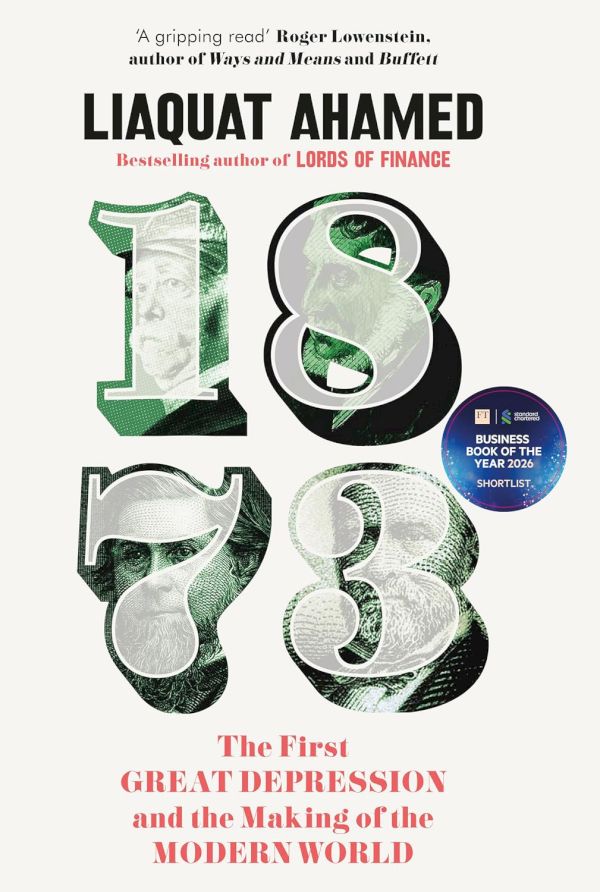
1873: The First Great Depression and the Making of the Modern World
This book is the second to be written by Liaquat Ahamed. He made his publishing debut back in 2009 with “Lords of Finance: The Bankers Who Broke the World”...
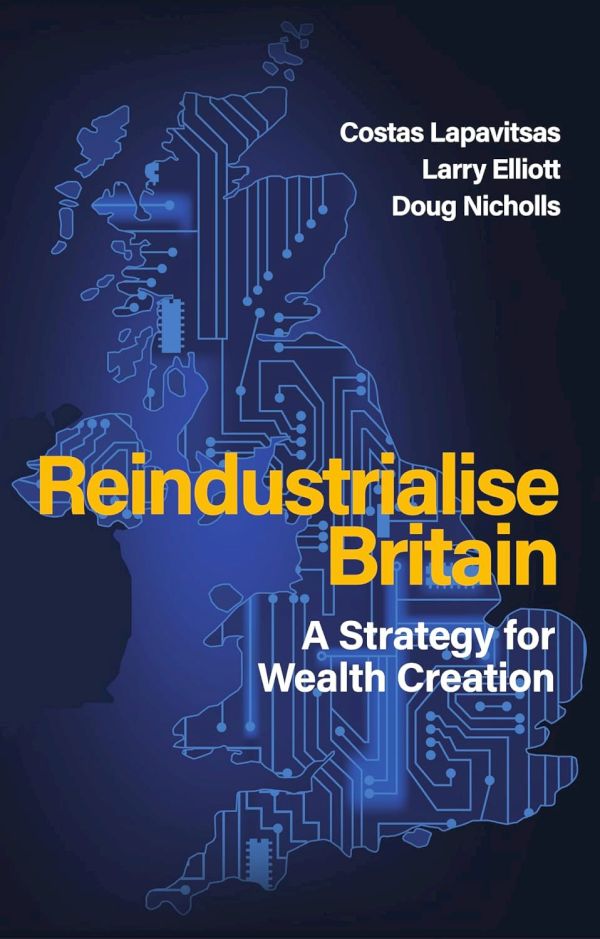
Reindustrialise Britain: A Strategy for Wealth Creation
The nearest thing to an epiphany I had as a student came when I read an early paper (by Dennis Snower, I think) on the “insider-outsider” model of the...
Prosperity Through Growth
What creates prosperity, and why do countries that have become rich sometimes seem to forget how they got there? We have covered this in previous SPE book...