Originally published in 2001 in The Business Economist, volume 32, issue 1. The original publication day is unrecorded.
Andrew Cox, Joe Sanderson & Glyn Watson, Earlsgate Press, 2000, xiv + 94 pages, £15.00.
From The Business Economist, volume 32, issue 1 (2001).
One of the interesting features of the business world in the last decade or so has been the emergence into centre-stage of supply chain management. After a century or more of neglect, the ways in which networks of suppliers, manufacturers and distributors interact to create and deliver customer value has now become one of the hottest topics around.
Fundamentally, the supply chain is the route by which materials and components move through a series of value-adding activities which transform them into useable products in the hands of consumers. Supply chains obviously have existed ever since economic activity began. However, what is new is the attempt to manage those chains to achieve a high degree of both efficiency and effectiveness.
Inevitably, as business ideas and priorities emerge and develop, academic interest in them also emerges and develops. In the case of supply chain management quite a lot of credit for the creation of the concepts that underpin its current manifestation must be given to the academics (and consultants) who helped develop and polish these ideas in the 1970s and 1980s. However, perhaps inevitably with the growing academic interest in the area has come the emergence of different ‘schools of thought’. Even though these differences are often more apparent than real, they still generate significant heat.
Andrew Cox and his colleagues represent a school which quite definitely could not be described as supporters of conventional supply chain orthodoxy. Simply expressed, the current conventional orthodoxy says that co-operation in the supply chain produces better results for all than the traditional adversarial and/or arms length relationships that have tended to predominate in most industries. Whilst Cox and his colleagues would not reject the proposition that collaboration makes sense in certain conditions, their view is that ultimately what matters most is who controls the power in the supply chain and, hence, can appropriate the most value for themselves.
In this slim and provocative volume, the authors present a framework of appropriate relationship behaviours contingent upon the degree to which the added value in the supply chain is shared and the extent to which the parties wish to collaborate. The suggestion is that different types of relationship management are required in different circumstances. This is hardly a ground-breaking proposition and few would disagree with the need for a portfolio of relationships. Where many would disagree however, is that a case can be made for adversarial relationships. From the insights of Game Theory, from the ‘Prisoner’s Dilemma’ onwards, the evidence is very clear that collaborative working can grow the size of the cake – even if we still compete as to how the cake is sliced.
Martin Christopher Cranfield School of Management
Archived source: 2002-07-16 website capture.
More Book Reviews
All Reviews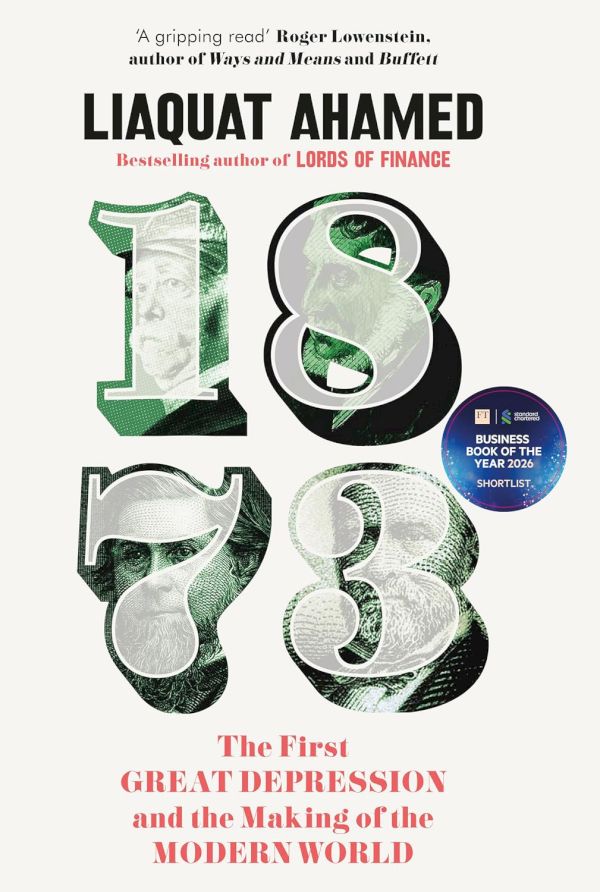
1873: The First Great Depression and the Making of the Modern World
This book is the second to be written by Liaquat Ahamed. He made his publishing debut back in 2009 with “Lords of Finance: The Bankers Who Broke the World”...

Can we be rich again? The surprising potential of Britain’s economy
Jeremy Hunt has been culture secretary, heath minister, foreign secretary and most recently Chancellor in Rishi Sunak’s government. His stint at HM Treasury...
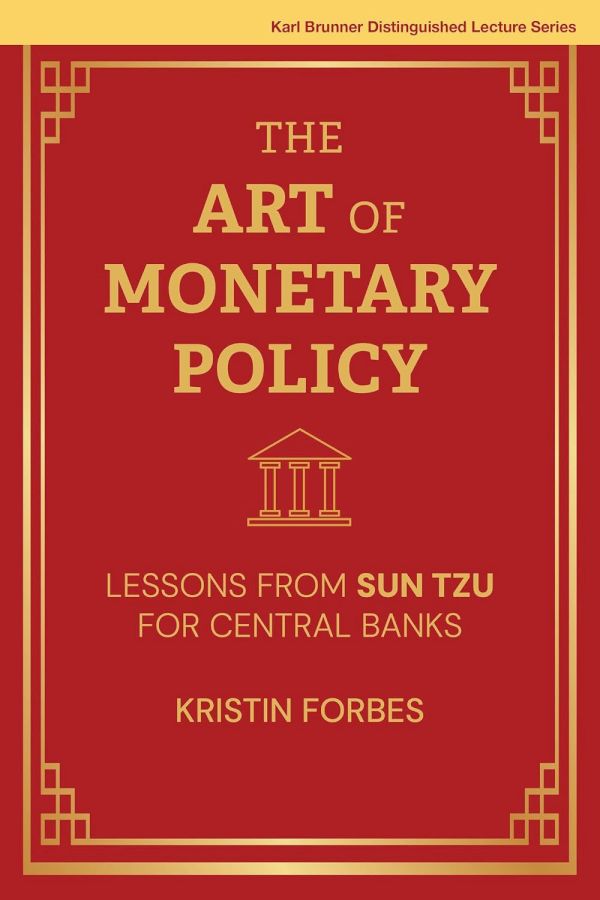
The Art of Monetary Policy: Lessons from Sun Tzu for Central Banks
This (very short) book extends a lecture given by Forbes, in which she draws on the work of the Chinese philosopher Sun Tzu from the fifth century BC. Sun...