
Walk into the non-fiction or economics section of any bookshop and you will likely be greeted with a familiar sight. Displays of piled up books pointing out problems (real or exaggerated) with our economic system – from inequality and poverty to environmental destruction and climate change. A Century of Plenty does not belong in those piles. In it, a team of top consultants and researchers at the McKinsey Global Institute lay out a data driven vision of optimism extrapolating from a century of progress in the past to one of universal plenty in the years ahead. Their ambitious goal: that everyone in 2125 should enjoy at least the standard of living (broadly defined) that a citizen of Switzerland does today; and that we their audience would believe this is both possible, and worthwhile.
The book, written in part to mark the 100th anniversary of McKinsey & Company, starts with a celebration of the last 100 years of progress from 1925 to 2025. This is one of the strongest sections of the book, covering a period that isn’t celebrated for human progress nearly as much as it could be. The authors marshal an impressive array of data covering income per person, poverty, democracy, inequality, education and beyond. But equally importantly they place it in the context of human stories of progress and empowerment. In fact, the whole of the book is interspersed with the family stories of those who worked on it from across the developed and developing world and richly illustrated with new and old photographs of the places and technologies discussed. These are crucial in humanising the narrative and make a book with plenty of dry statistics much more readable and engaging.
This is particularly the case in the detailed discussion of the drivers of progress that forms the second section of the book. From an economist’s perspective, this section is interesting because of how it diverges from the simple capital / labour / innovation model of a Cobb Douglas production function. As well as skills, workers, investment, and invention the authors dedicate chapters to urbanisation, trade, and markets as key factors in progress. Instead of algebra or arguments from theory, these are demonstrated through the stories of people and places. I found the broader discussion a welcome addition to my thinking, and the book does a good job of showing the ‘winding’ and sometimes dirty ascent of progress from different perspectives. They also anticipate many of the objections modern readers will have – to carbon emissions, environmental damage, and the existence of inequalities. These are addressed in detail, and it is refreshing to read a defence of economic growth and the modern world as ‘worth it’.
Most of the rest of the book deals with the feasibility of their 2125 ambition. Do we have the materials, food, energy, and ideas to make it happen? And can we do it without further damaging the environment? As is typical by this point, they answer in the affirmative (and with something of a consultant’s big picture flourish). In fact, in many cases they think we can do better, including by reducing our collective impact on the planet at the same time as becoming wealthier. The biggest barriers we face are not physical, environmental, or technical; they are political, institutional, and imaginative. Too many people are too negative about growth and the progress already made, let alone that in the future. A Century of Progress is consciously written to counter that negativity and it shows throughout. A strength of this section is that it leans on existing technology to show what is possible rather than speculating to much about future advances (AI and robotics are discussed as possibilities for an even better future). But parts of the story are covered quite quickly, and more time could have been spent making the innovations that will and are driving progress today feel as real as those in the earlier part of the book.
A Century of Plenty is valuable corrective and worth reading for anyone genuinely interested in whether the future can be better than today. The book is well written – though you can detect the odd piece of consultant speak – and extremely well researched. Its weakness is that it tries to do a lot and sometimes feels caught between being a technical note on the mechanics of progress, an inspiring vision for the future, and an apologia for growth in the face of environmental criticism. Not everything can get as much attention as it probably deserves. I particularly would have liked a stronger defence of markets and the profit motive as a means of allocating resources. Political challenges are (understandably) sidestepped. However, these are quibbles, and the book fundamentally succeeds in presenting and defending its vision. Next time I’m in a bookshop, I hope it’s on display.
More Book Reviews
All Reviews
Yesterday: The United Kingdom from Thatcher to Covid
This is an authoritative history of a period which represents most of my working lifetime. A quick clarification, however: that period runs loosely from Mrs...
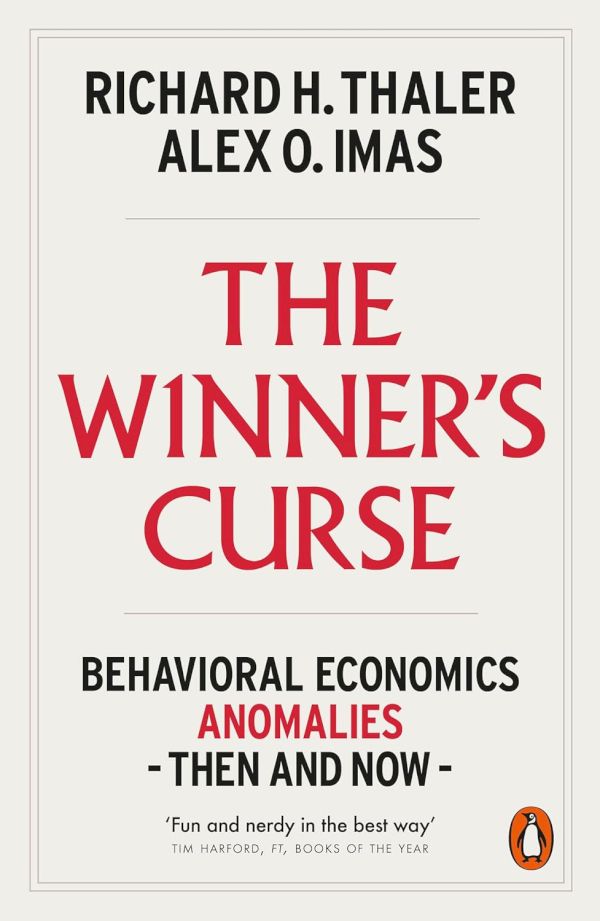
The Winner’s Curse
It would be cheeky of me to say there is no need to review a book partially authored by a Nobel economic prize winner that is in its third edition. That...
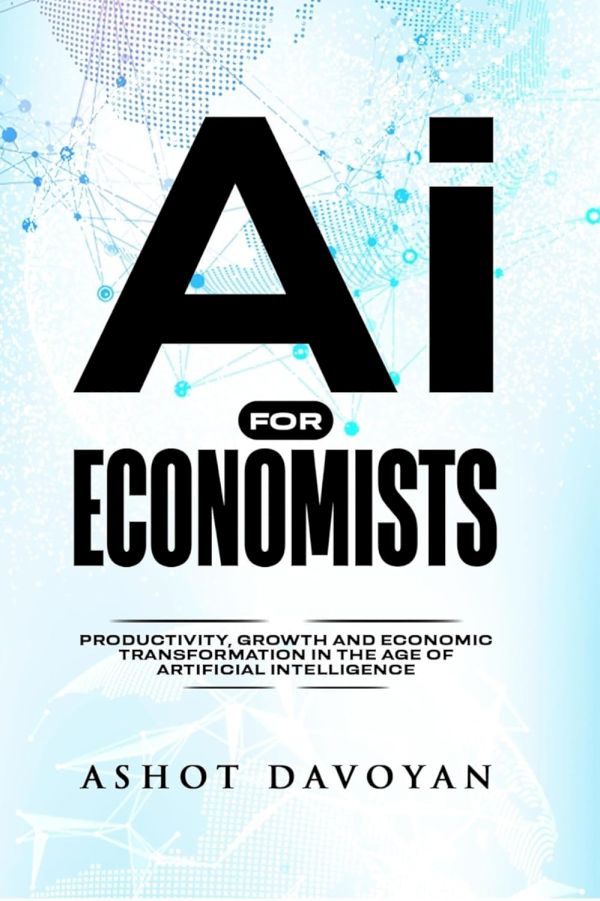
AI for Economists
I started reading this book just as the UK Government announced the setting up of an AI Economics Research centre chaired by Nobel Prize laureate Simon...