Kochland
The secret history of Koch Industries and corporate power in America
Reviewer: Robert Baker
Here Robert Baker reviews this book "If Then: How One Data Company Invented The Future", by Jill Lepore.
The Future of Money
How the Digital Revolution is Transforming Currencies and Finance
Reviewer: Carlo Cocuzzo, Digital Finance Specialist, Italy
Reviewer: Ian Bright, Consultant
We think we’ve seen financial innovation. We bank from laptops and buy coffee with the wave of a phone. But these are minor miracles compared with the dizzying experiments now underway around the globe, as businesses and governments alike embrace the possibilities of new financial technologies. As Eswar Prasad explains, the world of finance is at the threshold of major disruption that will affect corporations, bankers, states, and indeed all of us.
Cogs and Monsters
what economics is, and what it should be
Reviewer: Matt Whittaker, CEO, Pro Bono Economics
Digital technology, big data, big tech, machine learning, and AI are revolutionizing both the tools of economics and the phenomena it seeks to measure, understand, and shape. In Cogs and Monsters, Diane Coyle explores the enormous problems—but also opportunities—facing economics today if it is to respond effectively to these dizzying changes and help policymakers solve the world’s crises, from pandemic recovery and inequality to slow growth and the climate emergency.
The Spirit of Green
the economics of collisions and contagions in a crowded world
Reviewer: Keith Wade, Chief Economist, Schroders
The Spirit of Green by Nobel laureate William Nordhaus offers a primer on the economics of the environment and some key steps to limit global warming.
Prosperity:
Better Business Makes the Greater Good
Reviewer: Richard Bronk, https://imaginationineconomics.com/
What is business for? Day one of a business course will tell you: it is to maximise shareholder profit. This single idea pervades all our thinking and teaching about business around the world but it is fundamentally wrong, Colin Mayer argues. It has had disastrous and damaging consequences for our economies, environment, politics, and societies.
Trade Wars are Class Wars
Reviewer: Ian Bright
A provocative look at how today’s trade conflicts are caused by governments promoting the interests of elites at the expense of workers.
The Myth of Chinese Capitalism
Reviewer: Andrew Peaple
In The Myth of Chinese Capitalism, Roberts explores the reality behind today’s financially-ascendant China and pulls the curtain back on how the Chinese manufacturing machine is actually powered.
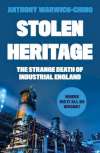
Stolen Heritage:
The Strange Death of Industrial England
Reviewer: Kevin Gardiner, Rothschild & Co/Cardiff Capital Region Economicn Growth Partnership
Britain was the cradle of the industrial revolution. Its manufacturing prowess sustained a unique global standing in the nineteenth century, bore it to victory in the great wars of the twentieth, was a trusty servant of its domestic needs and imperial pretensions, and an enduring source of pride. Quite suddenly, this pre-eminence has vanished. Only yesterday an industrial giant, the UK is heading for the third division.
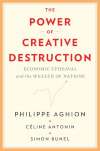
The Power of Creative Destruction:
Economic Upheaval and the Wealth of Nations
Reviewer: Bridget Rosewell
From one of the world's leading economists and his coauthors, a cutting-edge analysis of what drives economic growth and a blueprint for prosperity under capitalism.
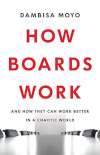
How Boards Work:
and how they can work better in a chaotic world
Reviewer: Dame Kate Barker, NED, Man Group plc
In How Boards Work prizewinning economist, veteran board director, and bestselling author Dambisa Moyo offers an insider's view of corporate boards as they are buffeted by the turbulence of our times
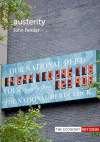
Austerity: When is it a mistake and when is it necessary?
Reviewer: William Allen, NIESR
For anyone seeking answers to such questions as: "What can we learn from the UK’s economic history that is relevant to current policy?", "Is austerity ever necessary or desirable?" and "Can the harmful effects of austerity programmes be mitigated?" then this book will be welcome reading.
Combating Inequality:
Rethinking Government’s Role
Reviewer: Christine Shields
Leading economists and policymakers consider what economic tools are most effective in reversing the rise in inequality.
Profit and Prejudice:
The Luddites of the Fourth Industrial Revolution
Reviewer: Vicky Pryce
Profit and Prejudice takes us through the relationship between economic success and prejudice in labour markets.
Mission Economy
A Moonshot Guide to Changing Capitalism
Reviewer: Bridget Rosewell
Even before the Covid-19 pandemic in 2020, capitalism was stuck. It had no answers to a host of problems, including disease, inequality, the digital divide and, perhaps most blatantly, the environmental crisis. Taking her inspiration from the 'moonshot' programmes which successfully co-ordinated public and private sectors on a massive scale, Mariana Mazzucato calls for the same level of boldness and experimentation to be applied to the biggest problems of our time.
1 comment
This Sovereign Isle
Britain In and Out of Europe
Reviewer: Kevin Gardiner, Rothschild & Co/Cardiff Capital Region Economic Growth Partners
In this succinct book, Tombs shows that the decision to leave the EU is historically explicable - though not made historically inevitable - by Britain's very different historical experience, especially in the twentieth century, and because of our more extensive and deeper ties outside Europe.
The Great British Reboot
How the UK Can Thrive in a Turbulent World
Reviewer: Christine Shields
An optimistic exploration of how, through radical economic reform, the United Kingdom can prosper and flourish in the new global economy.
Capital Wars
The Rise of Global Liquidity
Reviewer: Melissa Davies, Redburn
Global Liquidity is a much-discussed, but narrowly-researched and vaguely-defined topic. This book deeply explores the subject by clearly defining and measuring liquidity worldwide and by showing its importance for investors.
Angrynomics
Reviewer: Ian Bright
In Angrynomics, Mark Blyth and Eric Lonergan explore the rising tide of anger, sometimes righteous and useful, sometimes destructive and ill-targeted, and propose radical new solutions for an increasingly polarized and confusing world.
Outside The Box
Reviewer: Ian Harwood
From the acclaimed author of The Box, a new history of globalization that shows us how to navigate its future.
The Great Demographic Reversal
Reviewer: Dame Kate Barker, British Coal Staff Superannuation Scheme
This book demonstrates how these demographic trends are on the point of reversing sharply, coinciding with a retreat from globalisation. The result? Ageing can be expected to raise inflation and interest rates, bringing a slew of problems for an over-indebted world economy, but is also anticipated to increase the share of labour, so that inequality falls.