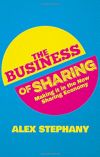
The Business of Sharing: Making it in the New Sharing Economy
Reviewer: Helen Solomon, Lecturer in Economics, De Montfort University
Today, 'collaborative consumption' lets people earn over $15 billion a year by sharing what they already own: from cars and homes to money and time. And that's almost nothing. According to PwC, the sharing economy will grow into a $335 billion market by 2025. Written by one of the business leaders of the movement, The Business of Sharing is an insider's guide for anyone thinking of entering the sharing economy and looking to profit from the upheavals ahead.
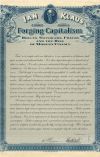
Forging capitalism
Rogues, swindlers and the rise of modern finance
Reviewer: Bill Allen
In a story teeming with playboys and scoundrels and rich in colorful and amazing events, Klaus chronicles the evolution of trust through three distinct epochs: the age of values, the age of networks and reputations, and, ultimately, in a world of increased technology and wealth, the age of skepticism and verification. In today’s world, where the questionable dealings of large international financial institutions are continually in the spotlight, this extraordinary history has great relevance, offering essential lessons in both the importance and the limitations of trust.
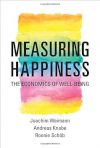
Measuring Happiness: The Economics of Well‑Being
Reviewer: Tony Dolphin, Senior Economist, IPPR
The authors examine the evolution of happiness research, considering the famous "Easterlin Paradox," which found that people's average life satisfaction didn't seem to depend on their income. But they question whether happiness research can measure what needs to be measured. They argue that we should not assess people's well-being on a "happiness scale," because that necessarily obscures true social progress. Instead, rising income should be understood as increasing opportunities and alleviating scarcity.
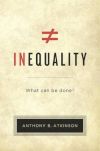
Inequality: What can be done?
Reviewer: Dame Kate Barker, Chairman, Society of Business Economists
Inequality is one of our most urgent social problems. Curbed in the decades after World War II, it has recently returned with a vengeance. Anthony Atkinson has long been at the forefront of research on inequality, and brings his theoretical and practical experience to bear on its diverse problems. In this book, he presents a comprehensive set of policies that could bring about a genuine shift in the distribution of income in developed countries.
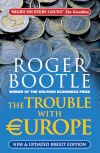
The Trouble with Europe
Reviewer: Donald Anderson
The EU needs fundamental reform: it has not delivered the prosperity and growth it promised; the euro has turned out to be part of the problem rather than the solution; the EUs share of world GDP is set to fall sharply. This updated and expanded edition of Roger Bootle s critically acclaimed book includes new material on federal union, policies to avert catastrophe in the Eurozone (including the Greek situation) and mass migration.
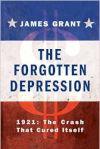
The Forgotten Depression - 1921: The Crash that Cured Itself
Reviewer: Bill Allen
The Forgotten Depression - 1921 is an account of the deep economic slump of 1920–21 that proposes, with respect to federal intervention, “less is more.” This is a free-market rejoinder to the Keynesian stimulus applied by Bush and Obama to the 2007–09 recession, in whose aftereffects, Grant asserts, the nation still toils.
James Grant tells the story of America’s last governmentally-untreated depression; relatively brief and self-correcting, it gave way to the Roaring Twenties. His book appears in the fifth year of a lackluster recovery from the overmedicated downturn of 2007–2009
Can financial markets be controlled?
Reviewer: Kitty Ussher, Managing Director, Tooley Street Research
The Global Financial Crisis overturned decades of received wisdomon how financial markets work, and how best to keep them in check.Since then a wave of reform and re–regulation has crashed overbanks and markets. Financial firms are regulated as never before.
But have these measures been successful, and do they go farenough? In this smart new polemic, former central banker andfinancial regulator, Howard Davies, responds with a resounding no . The problems at the heart of the financial crisis remain. There is still no effective co–ordination of internationalmonetary policy. The financial sector is still too big and,far from protecting the economy and the tax payer, recentgovernment legislation is exposing both to even greater risk.

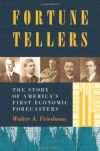
Fortune Tellers: The Story of America’s First Economic Forecasters
Reviewer: Ian Harwood, Independent Consultant
The period leading up to the Great Depression witnessed the rise of the economic forecasters, pioneers who sought to use the tools of science to predict the future, with the aim of profiting from their forecasts. This book chronicles the lives and careers of the men who defined this first wave of economic fortune tellers, men such as Roger Babson, Irving Fisher, John Moody, C. J. Bullock, and Warren Persons. They competed to sell their distinctive methods of prediction to investors and businesses, and thrived in the boom years that followed World War I. Yet, almost to a man, they failed to predict the devastating crash of 1929.
Walter Friedman paints vivid portraits of entrepreneurs who shared a belief that the rational world of numbers and reason could tame–or at least foresee–the irrational gyrations of the market. Despite their failures, this first generation of economic forecasters helped to make the prediction of economic trends a central economic activity, and shed light on the mechanics of financial markets by providing a range of statistics and information about individual firms. They also raised questions that are still relevant today. What is science and what is merely guesswork in forecasting? What motivates people to buy forecasts? Does the act of forecasting set in motion unforeseen events that can counteract the forecast made?
Masterful and compelling, Fortune Tellers highlights the risk and uncertainty that are inherent to capitalism itself.
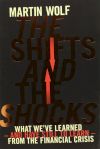
The Shifts and the Shocks
What we’ve learned - and have still to learn - from the financial crisis
Reviewer: Mark Cleary, Kinetic Economics
Chief Economics Commentator of the Financial Times Martin Wolf gives an insightful and timely analysis of why the financial crisis occurred, and of the radical reforms needed if we are to avoid a future repeat.
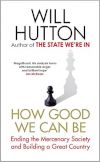
How Good Can We Be
Ending The Mercenary Society And Building A Great Country
Reviewer: Christine Shields, Shields Economics
Britain is beset by a crisis of purpose. For a generation we have been told the route to universal well-being is to abandon the expense of justice and equity and so allow the judgments of the market to go unobstructed. What has been created is not an innovative, productive economy but instead a capitalism that extracts value rather than creates it, massive inequality, shrinking opportunity and a society organised to benefit the top 1%. The capacity to create new jobs and start-ups should not disguise that in the main the new world is one of throw away people working in throw away companies. The British are at a loss.
British Financial Crises since 1825
Reviewer: Bridget Rosewell
This book provides a history of British financial crises since the Napoleonic wars. Interest in crises lapsed during the generally benign financial conditions which followed the Second Word War, but the study of banking markets and financial crises has returned to centre stage following the credit crunch of 2007-8 and the subsequent Eurozone crisis.

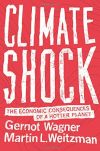
Climate Shock: The Economic Consequences of a Hotter Planet
Reviewer: David Fell, Director, Brook Lyndhurst
In Climate Shock, Gernot Wagner and Martin Weitzman explore in lively, clear terms the likely repercussions of a hotter planet, drawing on and expanding from work previously unavailable to general audiences
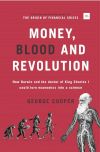
Money, blood and revolution
How Darwin and the doctor of King Charles I could turn economics into a science
Reviewer: Keith, Wade, Chief Economist, Schroders
Economics is a broken science, living in a kind of Alice in Wonderland state believing in multiple, inconsistent, things at the same time. Prior to the financial crisis, mainstream economics argued simultaneously for small government on taxation, regulation and spending, but big government on monetary policy. After the financial crisis, economics is now arguing for more government spending and for less government spending.
The premise of this book is that the internal inconsistencies between economic theories - the apparently unresolvable debates between leading economists and the incoherent policies of our governments - are symptomatic of economics being in a crisis. Specifically, in a scientific crisis.
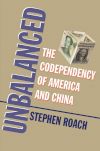
Unbalanced: The co‑dependency of America and China
Reviewer: Christine Shields, Shields Economics
The Chinese and U.S. economies have been locked in an uncomfortable embrace since the late 1970s. Although the relationship initially arose out of mutual benefits, in recent years it has taken on the trappings of an unstable codependence, with the two largest economies in the world losing their sense of self, increasing the risk of their turning on one another in a destructive fashion. In Unbalanced: The Codependency of America and China Stephen Roach, senior fellow at Yale University and former chairman of Morgan Stanley Asia, lays bare the pitfalls of the current China-U.S. economic relationship.
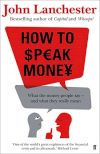
How to Speak Money
Reviewer: Anna Leach, Head of Economic Analysis, CBI
Money is our global language. Yet so few of us can speak it. The language of the economic elite can be complex, jargon-filled and completely baffling. Above all, the language of money is the language of power - power in the hands of the same economic elite.
Now John Lanchester, bestselling author of Capital and Whoops! sets out to decode the world of finance for all of us, explaining everything from high-frequency trading and the World Bank to the difference between bullshit and nonsense.
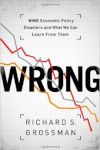
Wrong
Nine economic policy disasters and what we can learn from them
Reviewer: James Howatt, Capital Economics
In recent years, the world has been rocked by major economic crises. In Wrong, economist Richard Grossman addresses why these came about, shining a light on the poor thinking behind nine of the worst economic policy mistakes of the past 200 years, missteps whose outcomes ranged from appalling to tragic.
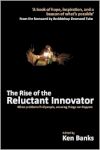
The Rise of the Reluctant Innovator
Reviewer: Adrian Woods, Eurekazone
The Rise of the Reluctant Innovator" provides a welcome challenge to conventional wisdom in social entrepreneurship. It highlights the personal stories of ten social innovators from around the world.
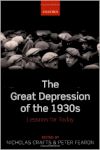
The Great Depression of the 1930s
Lessons for today
Reviewer: Bill Allen
This edited collection provides an authoritative introduction to the Great Depression as it affected the advanced countries in the 1930s
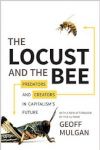
The Locust and the Bee
Predators and Creators in Capitalism’s Future
Reviewer: Rebecca Harding, Delta Economics
Geoff Mulgan argues in this compelling, imaginative, and important book, that the economic crisis also presents a historic opportunity to choose a radically different future for capitalism, one that maximizes its creative power and minimizes its destructive force.
Globalization and Development
Why East Asia Surged Ahead and Latin America Fell Behind
Reviewer: Mina Toksoz, Emerging Market and Country Risk Consultant
Why has there has been such a pronounced divergence in the economic fortune of developing countries? Comparing the experience of East Asia and Latin America since the mid-1970s, Elson identifies the key internal factors common to each region which have allowed East Asia to take advantage of the trade, financial, and technological impact of a more globalized economy to support its development, while Latin America has not.